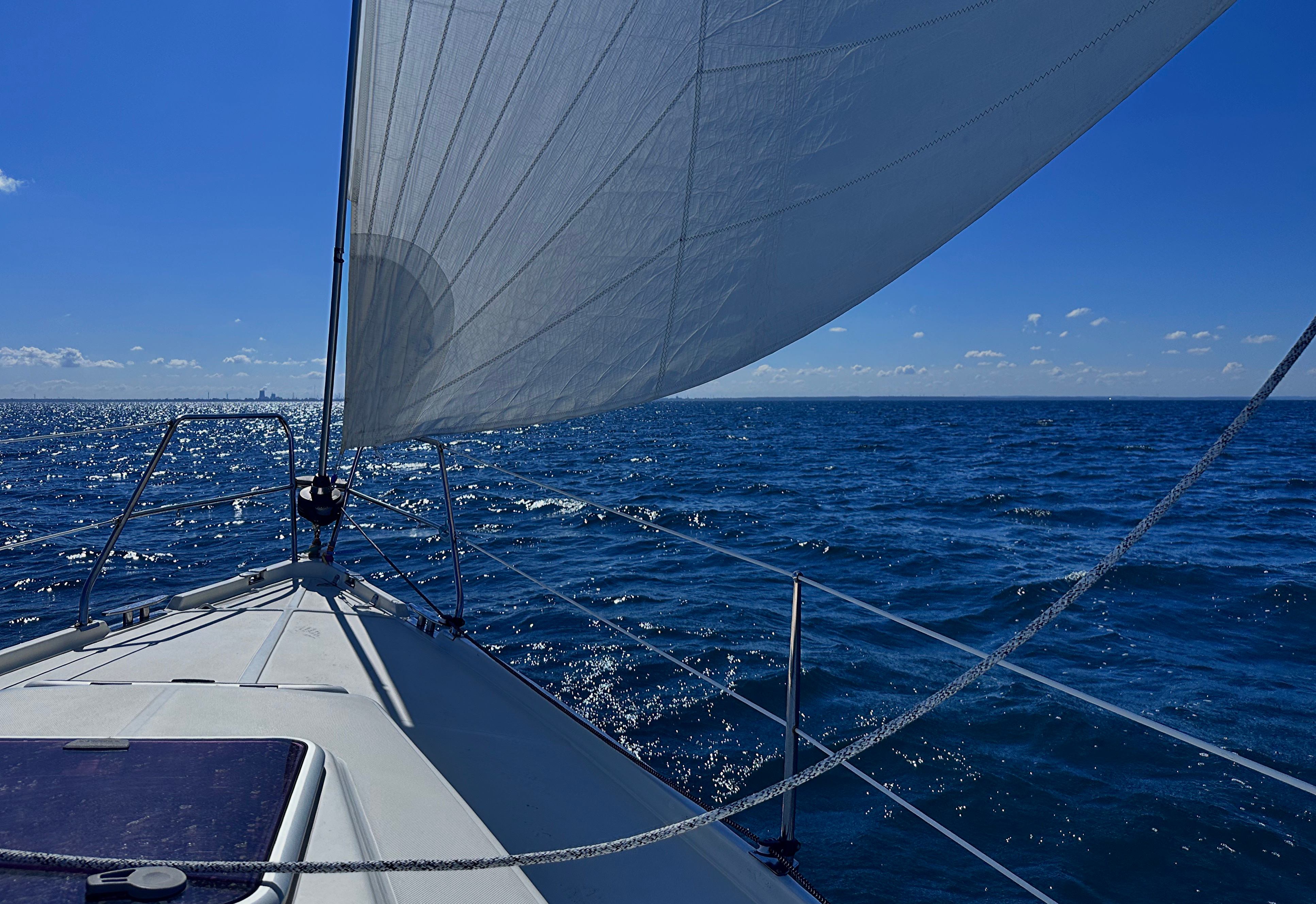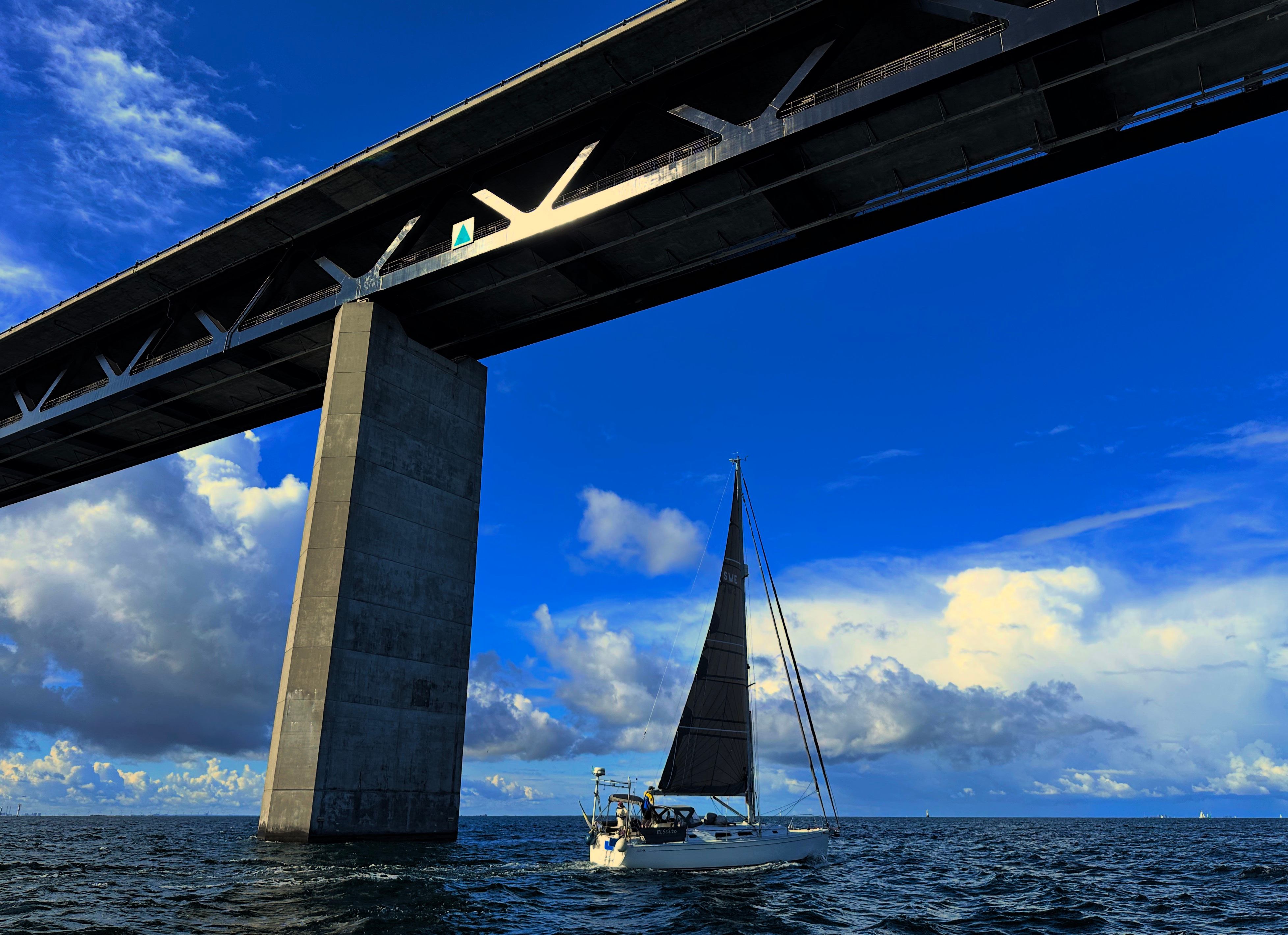
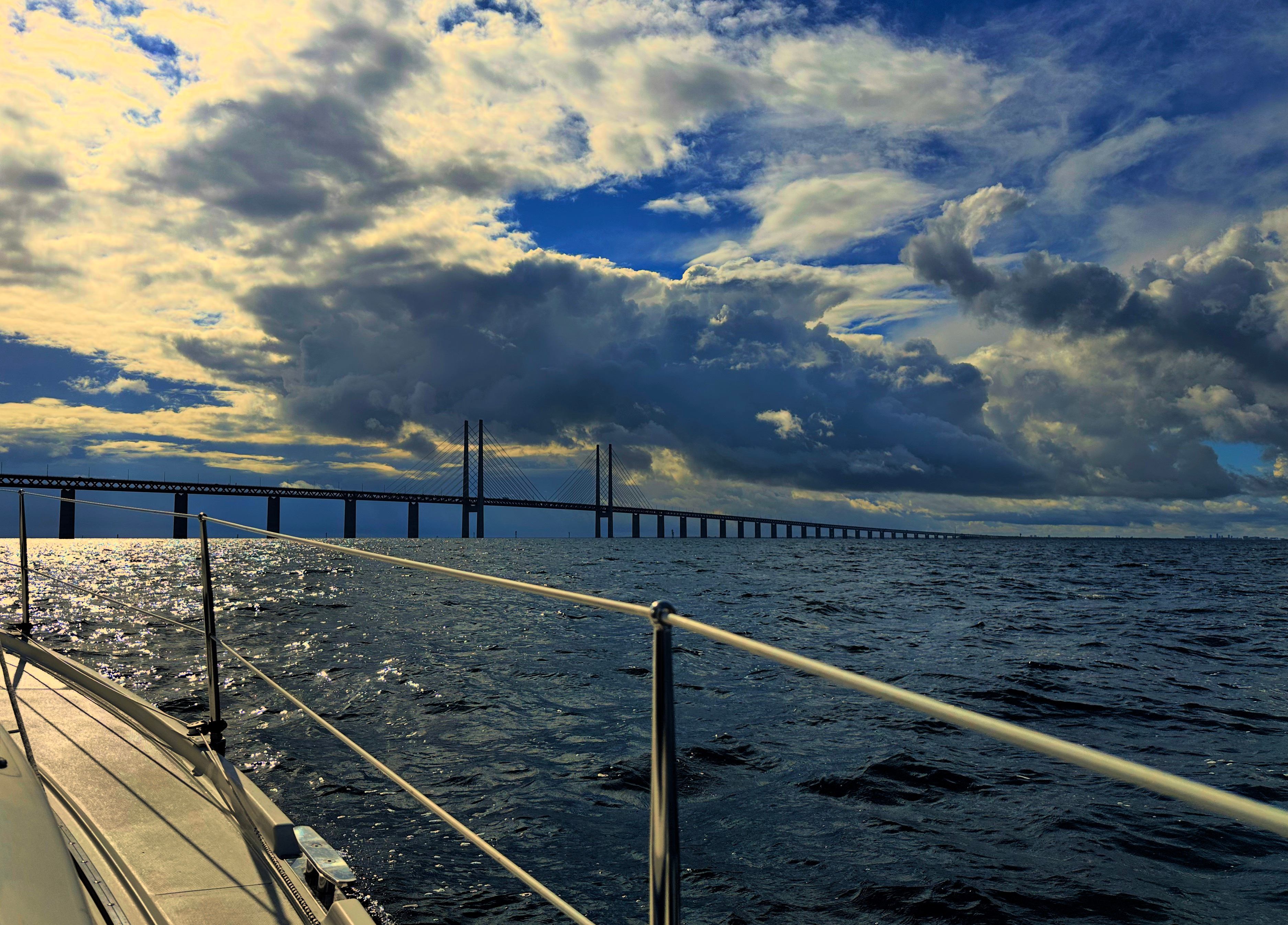
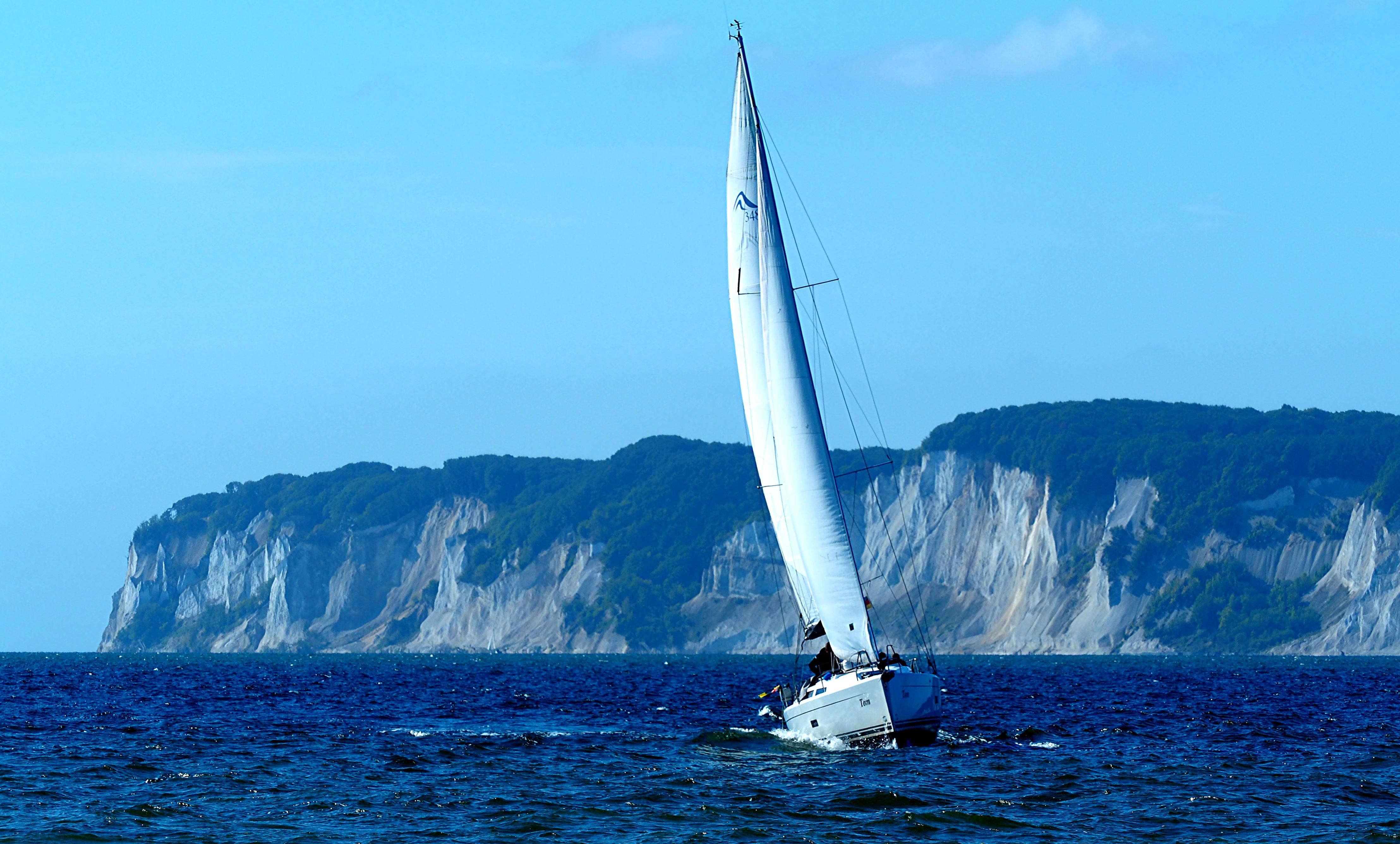
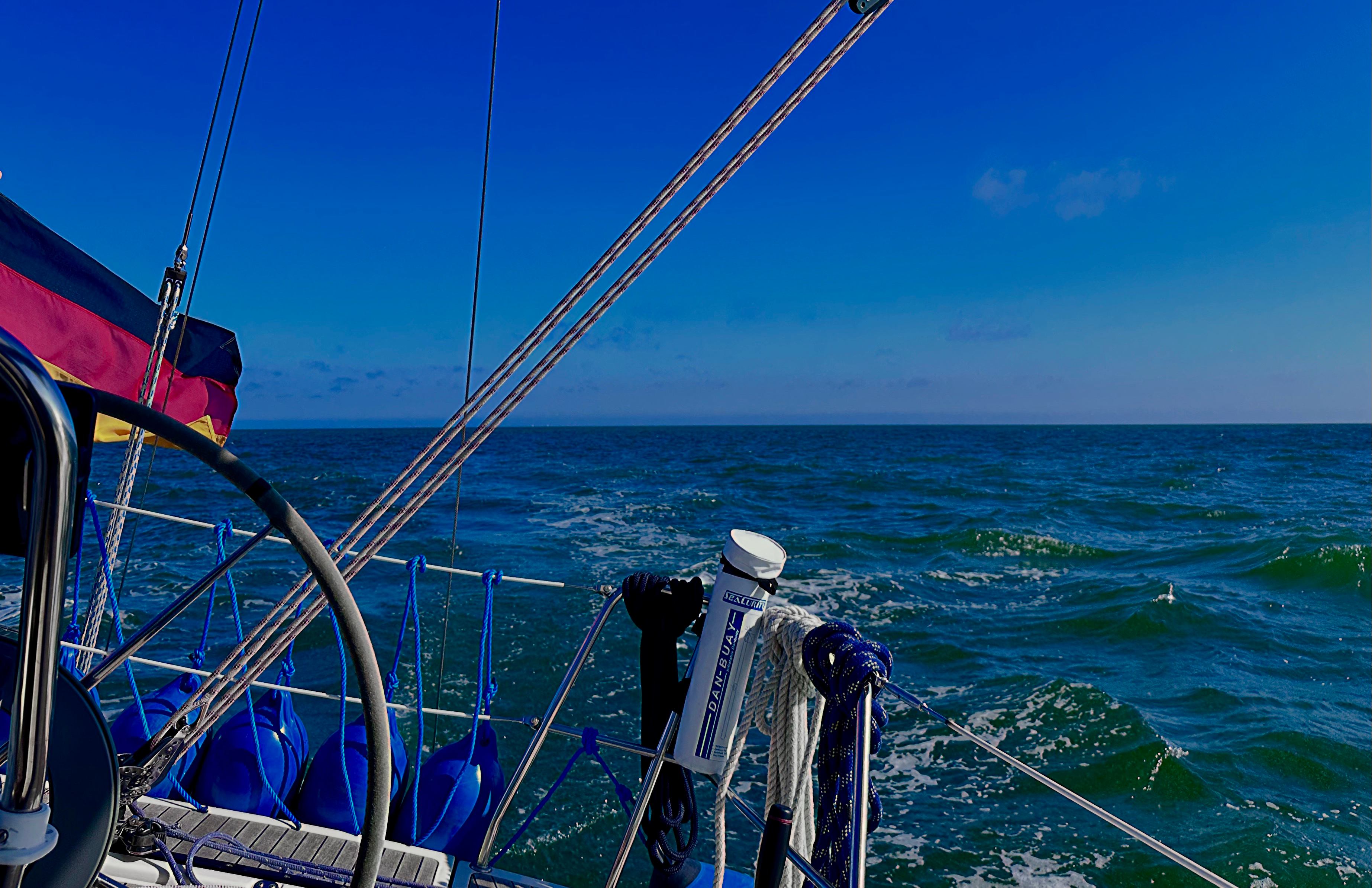
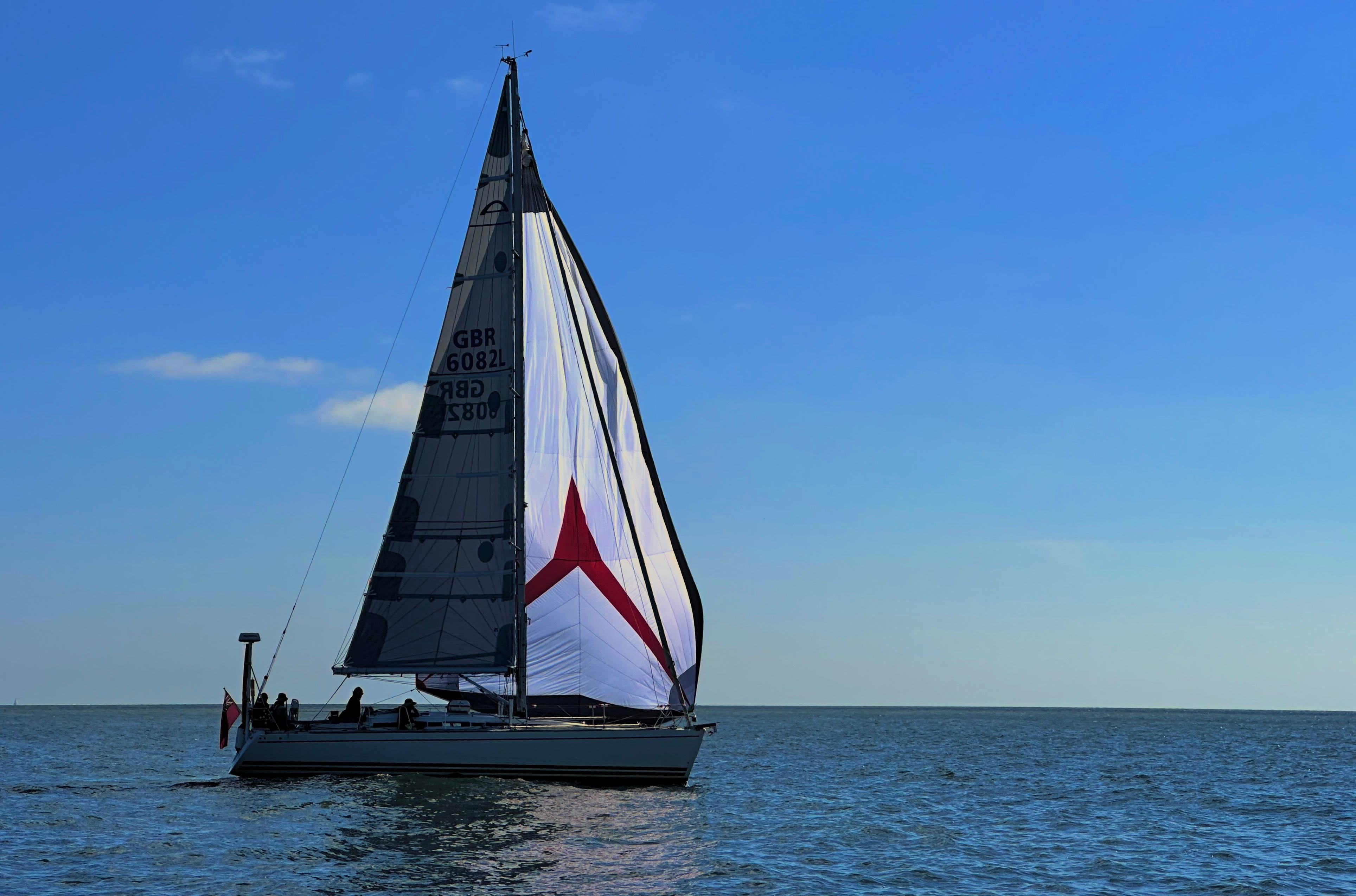
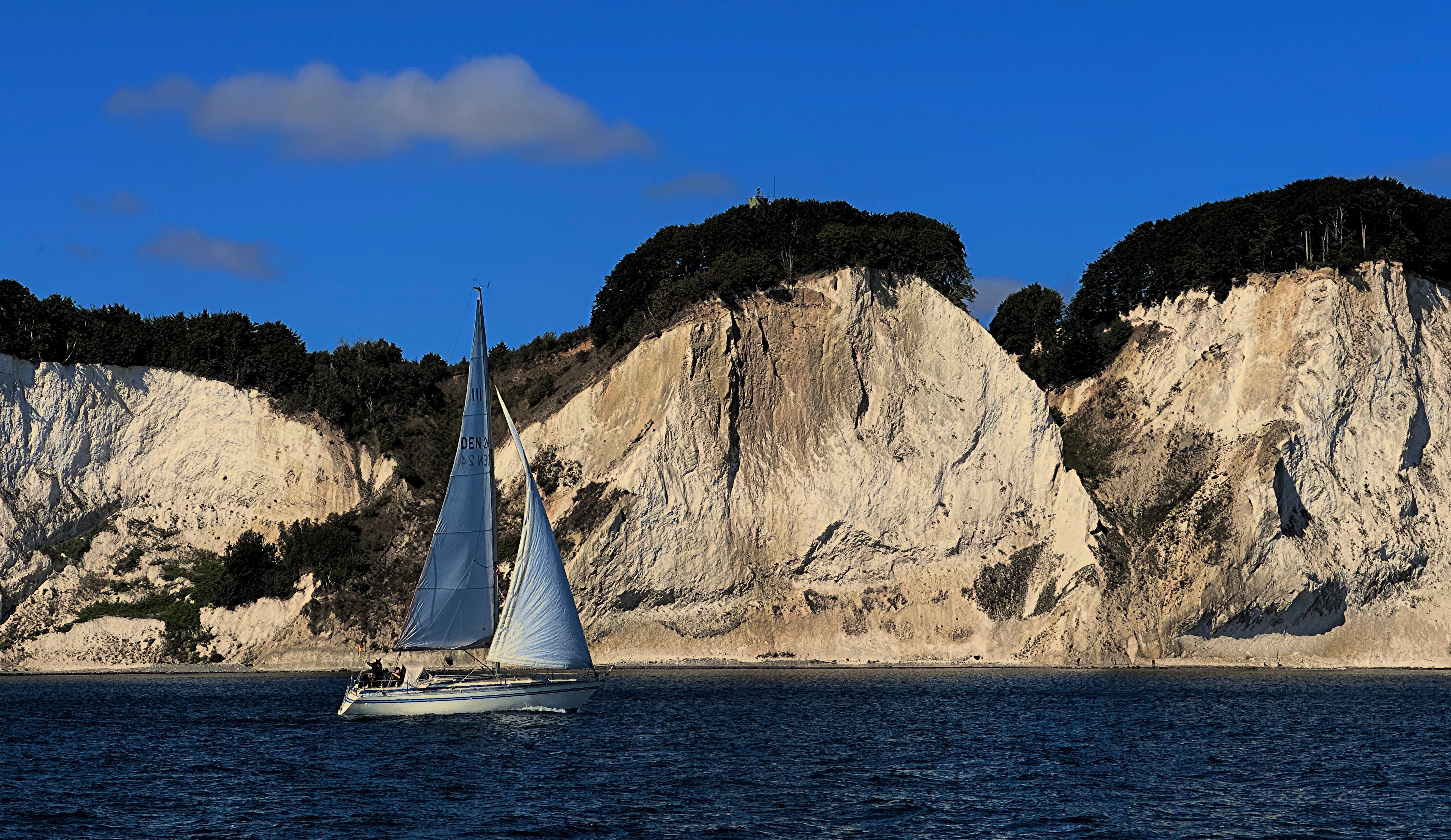
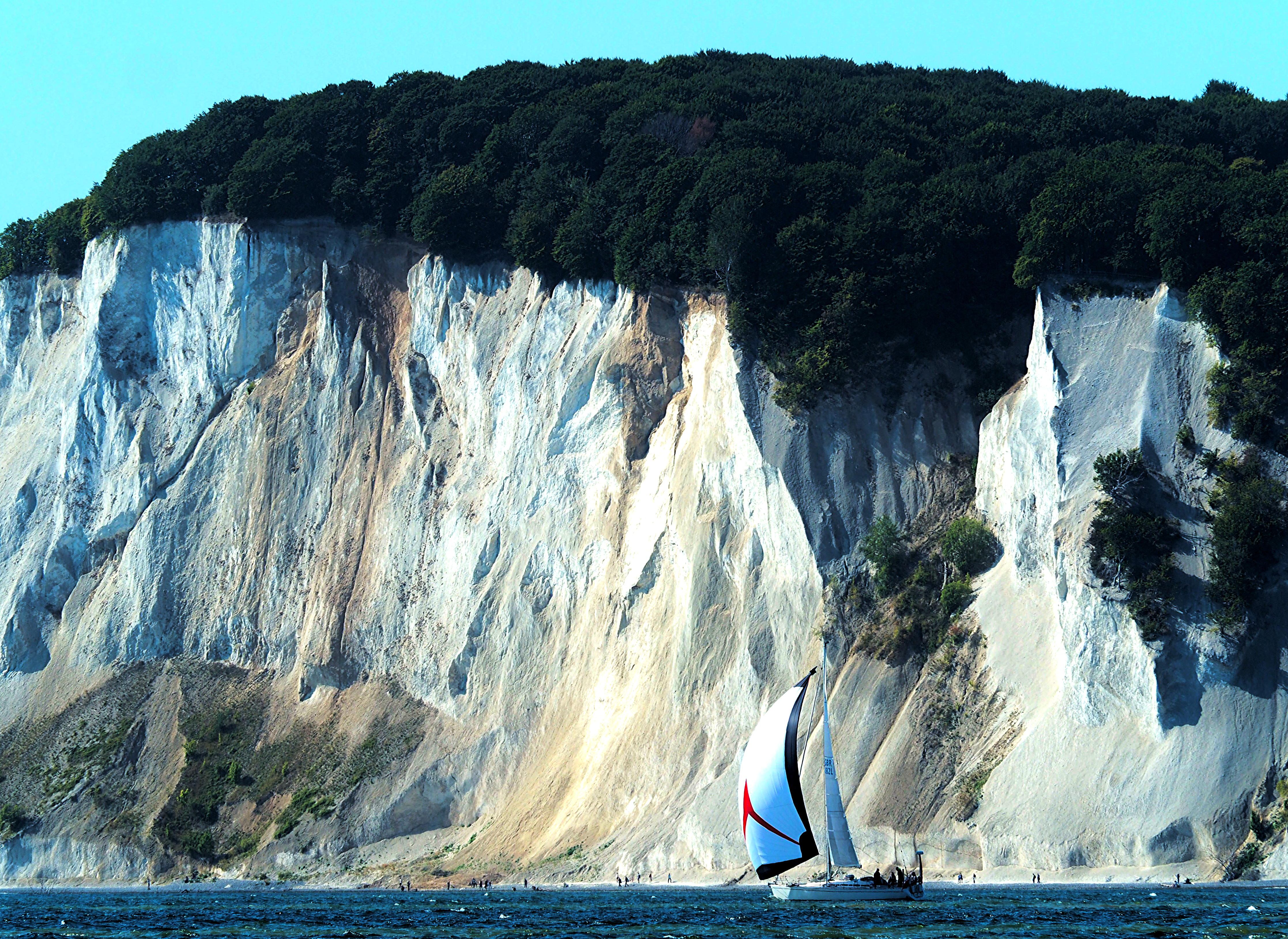
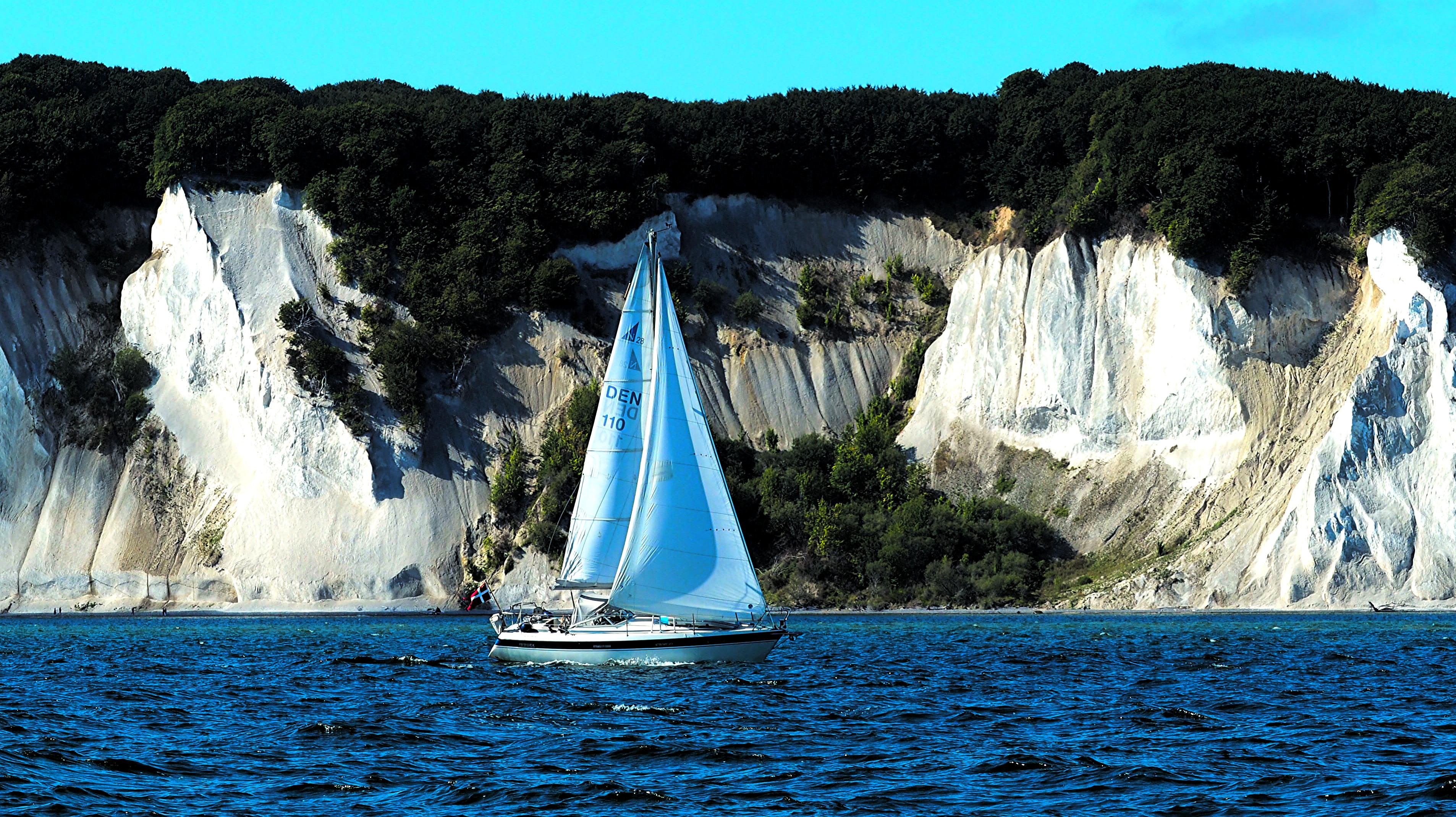
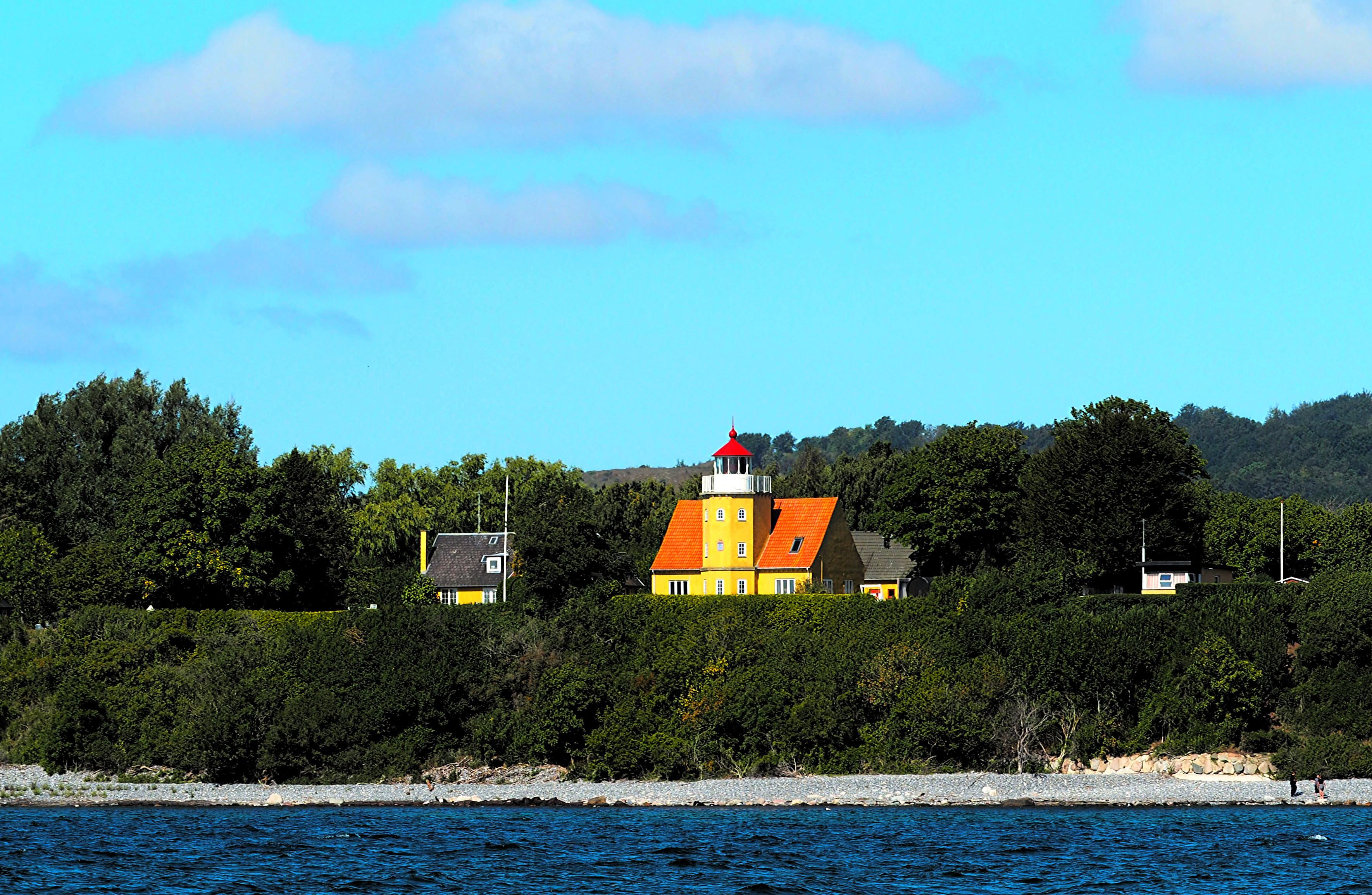
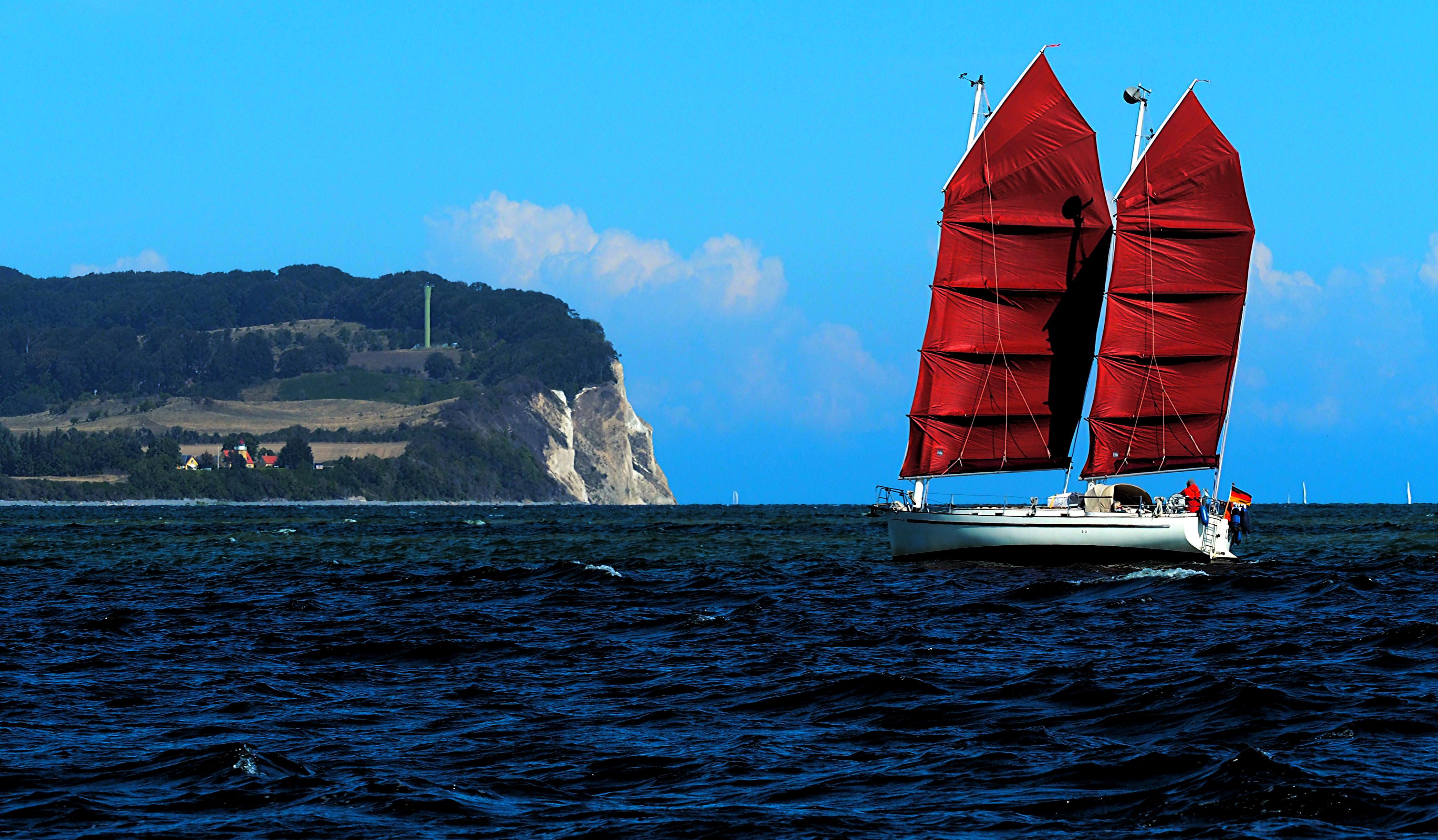
From Malmö, we now finally turn our bow towards Germany. After a somewhat uncomfortable twenty nautical miles or so against a strong wind and a lively sea to Skanör, passing beneath the Øresund Bridge on the way (see above), we enjoy what may be the finest thirty nautical miles of sailing of the entire voyage, heading for the eastern tip of Møns Klint, the famous chalk cliffs on the Danish island of Møn. SY Blue Layla flies over the waves on her favourite point of sail, while the white horses finally begin to subside as the day wears on. There are porpoises too — and plenty of algae, a sure sign that we have reached warmer waters. Another twenty nautical miles or so of sunlit tacking then take us to Hesnæs on Falster, before the final leg across the Kadetrinne to Warnemünde is to be undertaken.
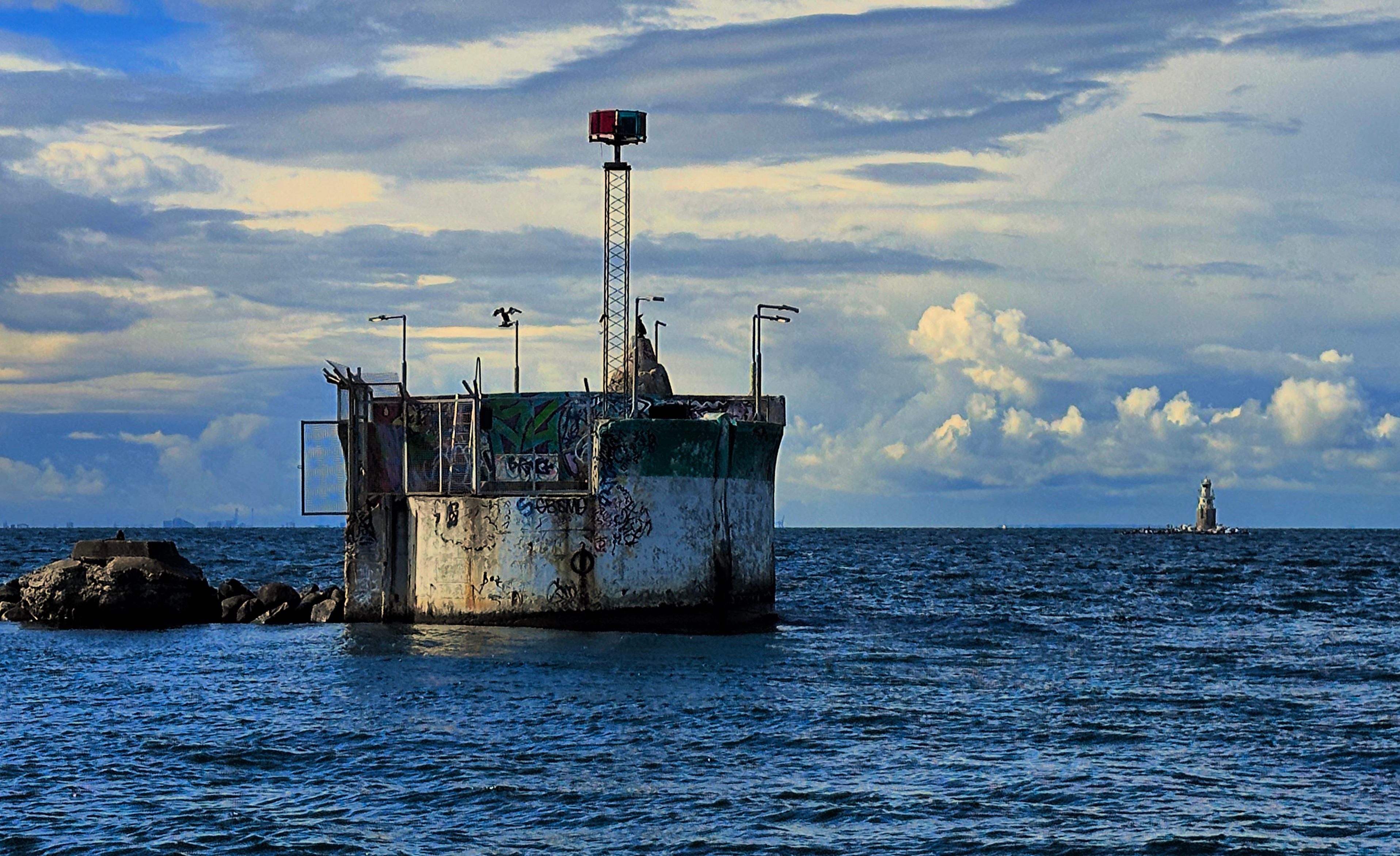
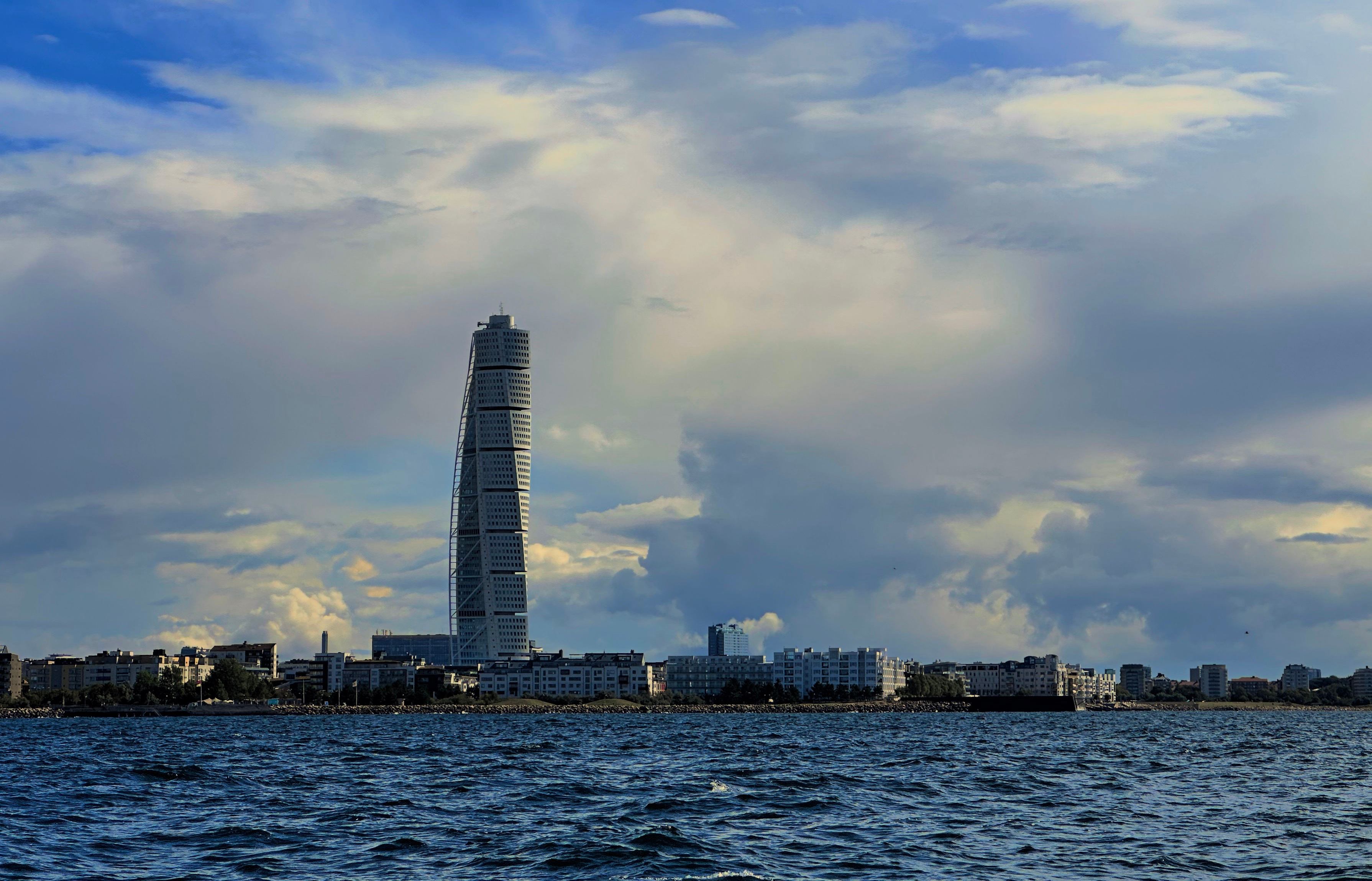
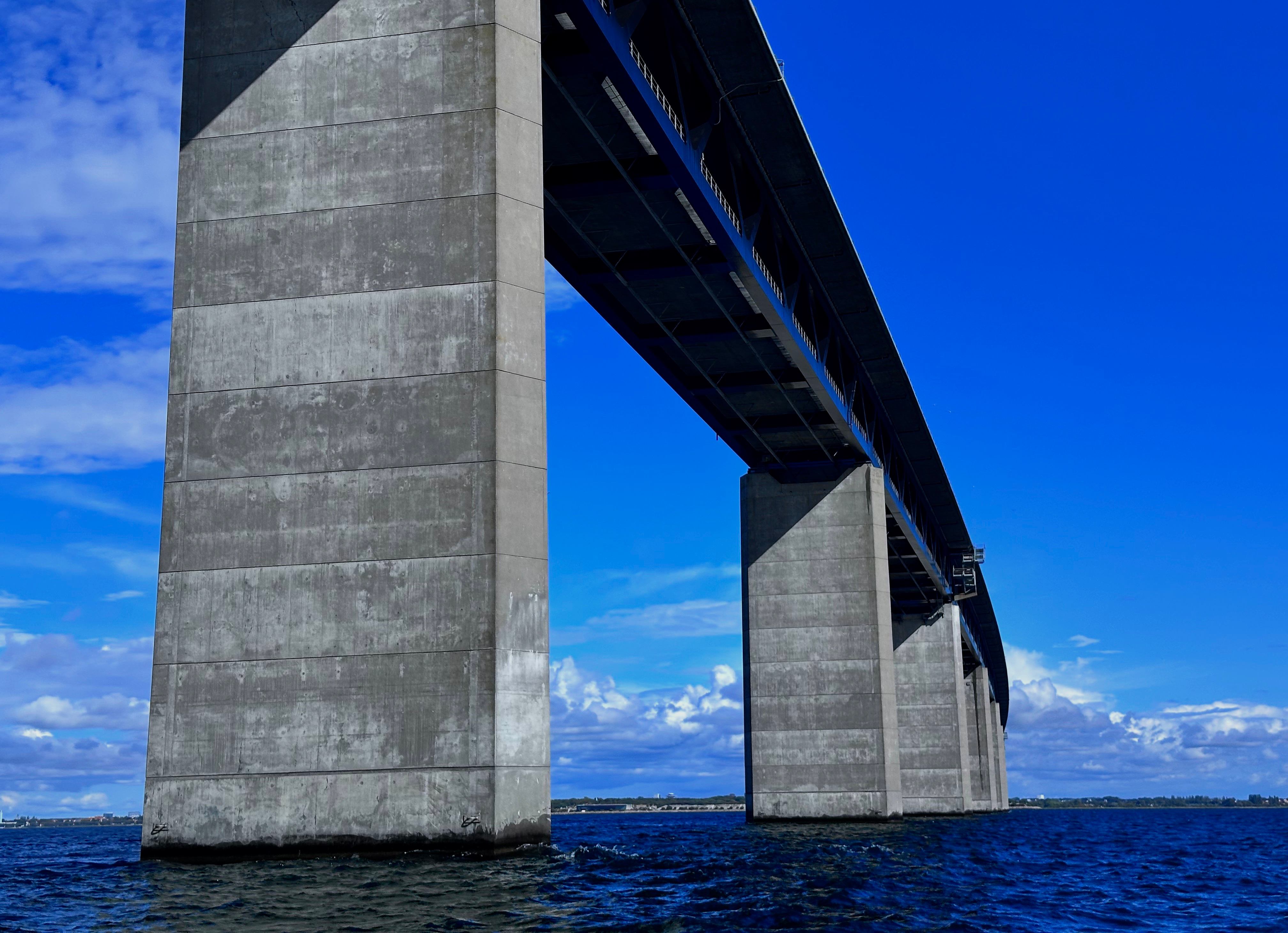
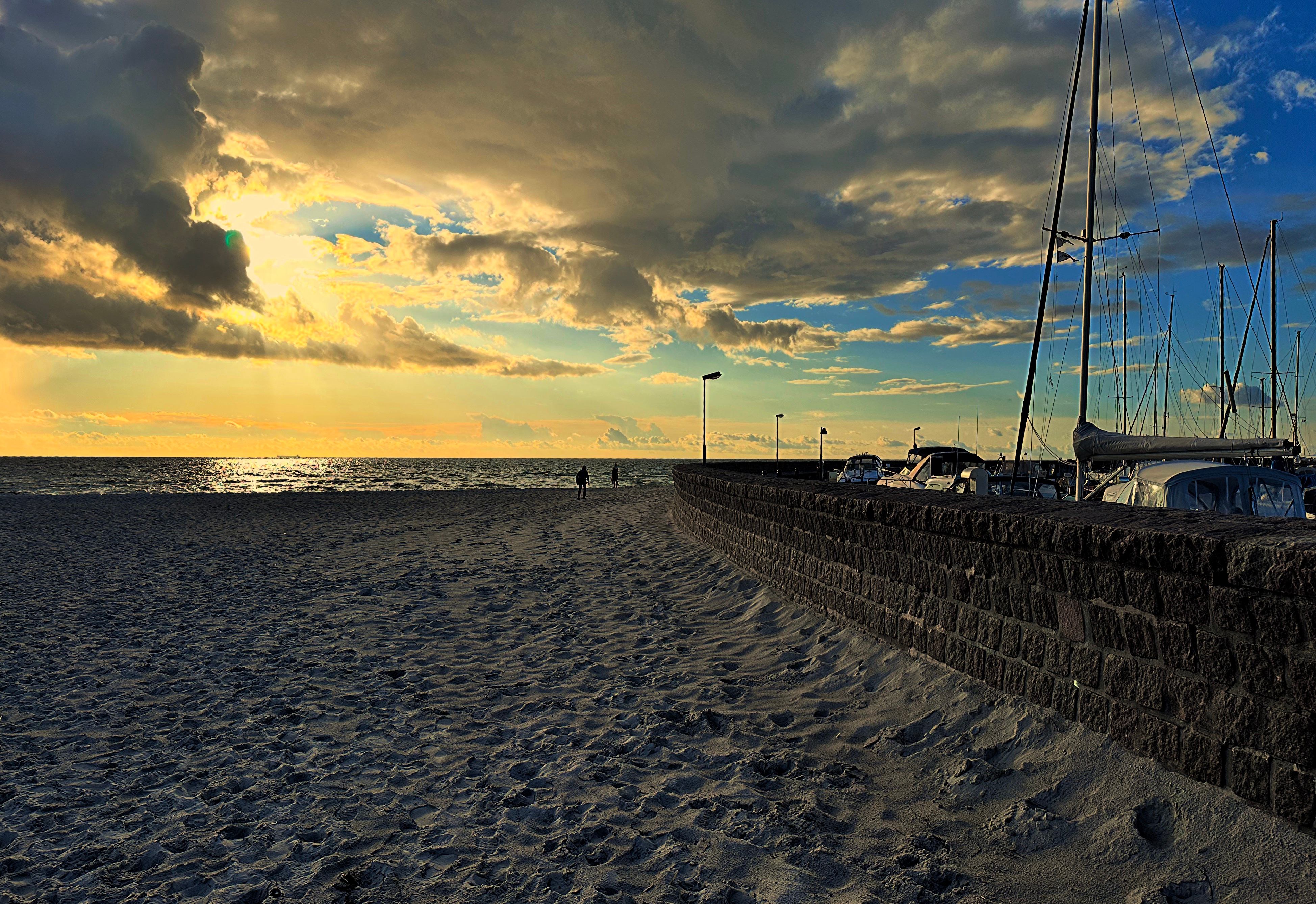
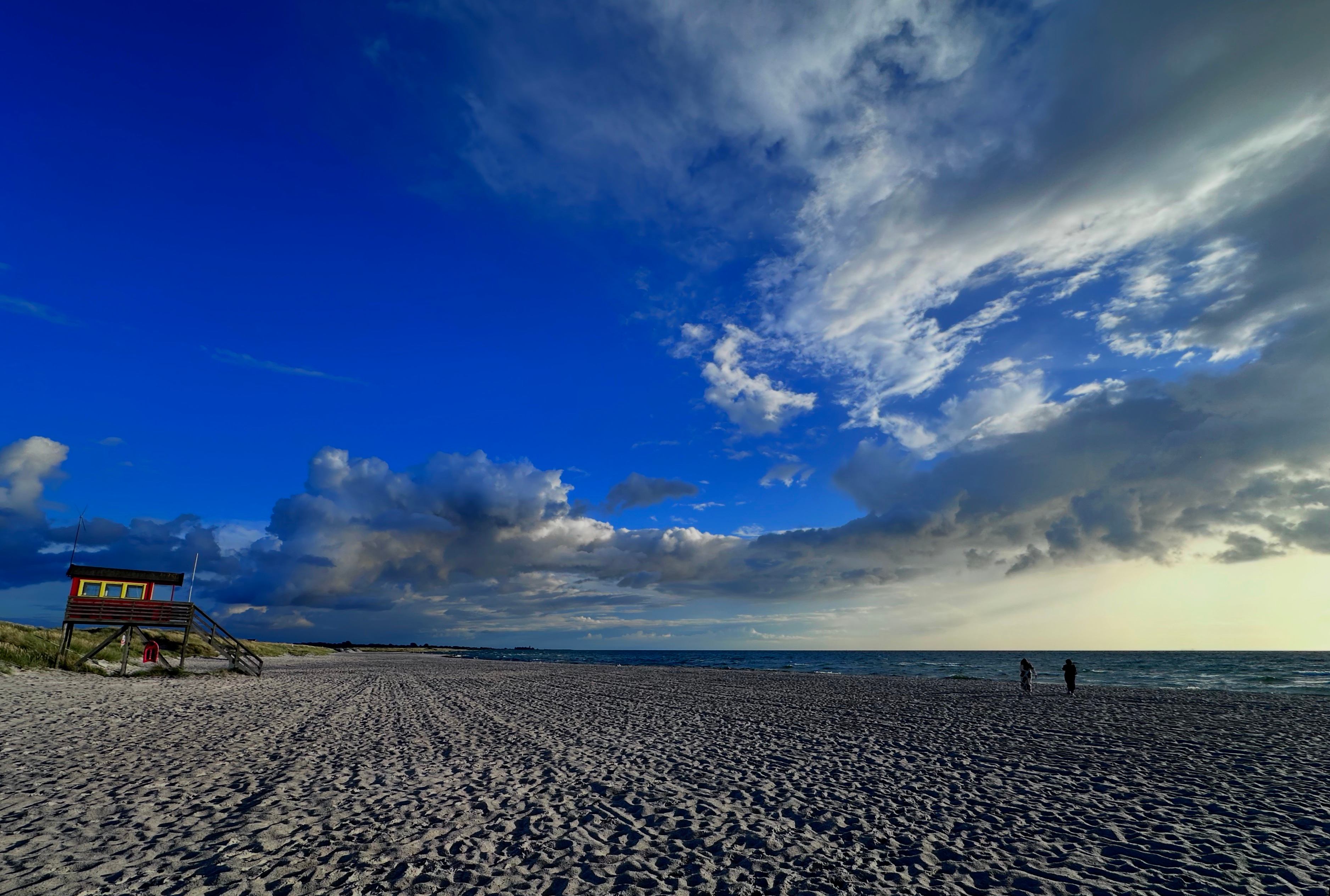
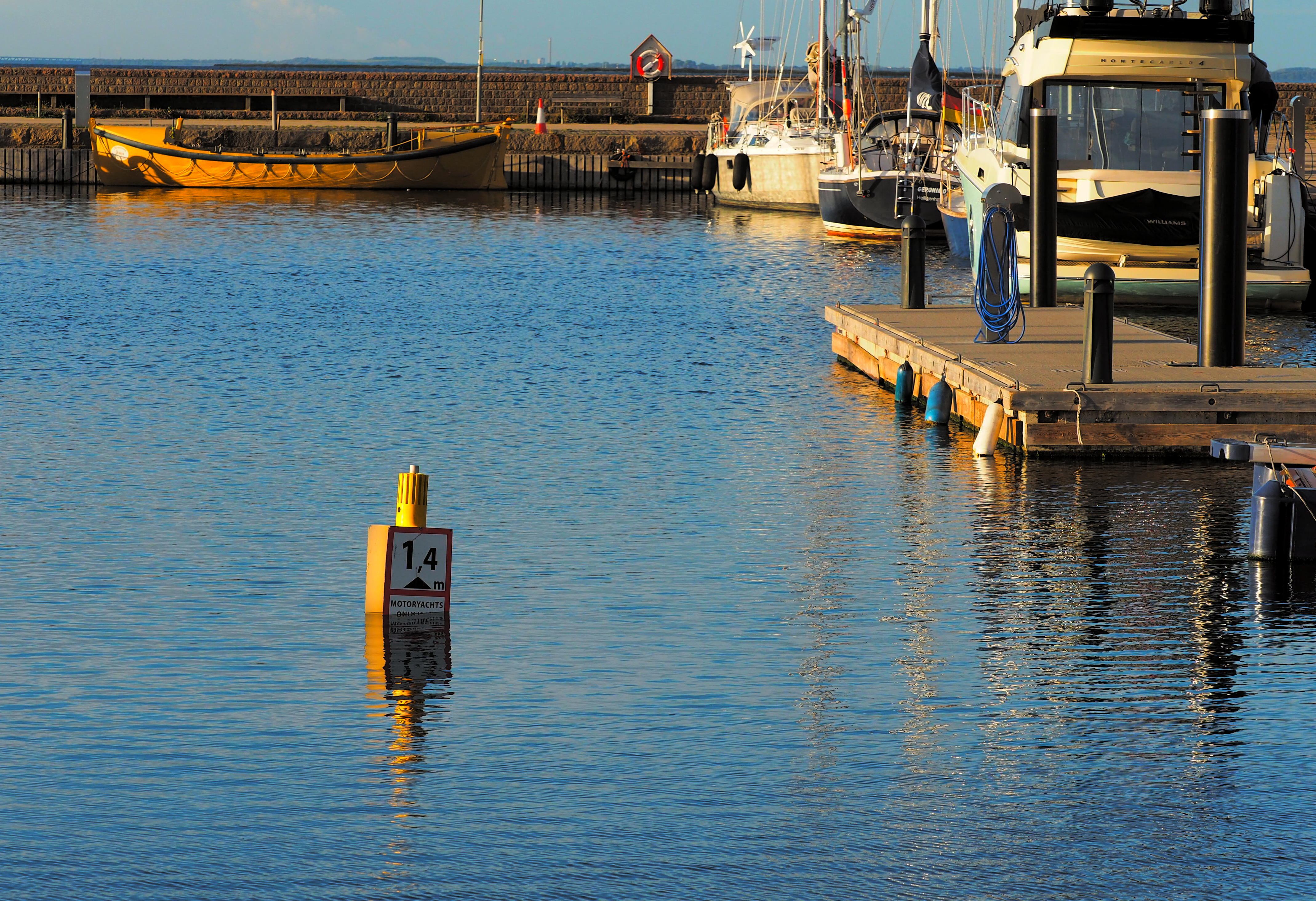
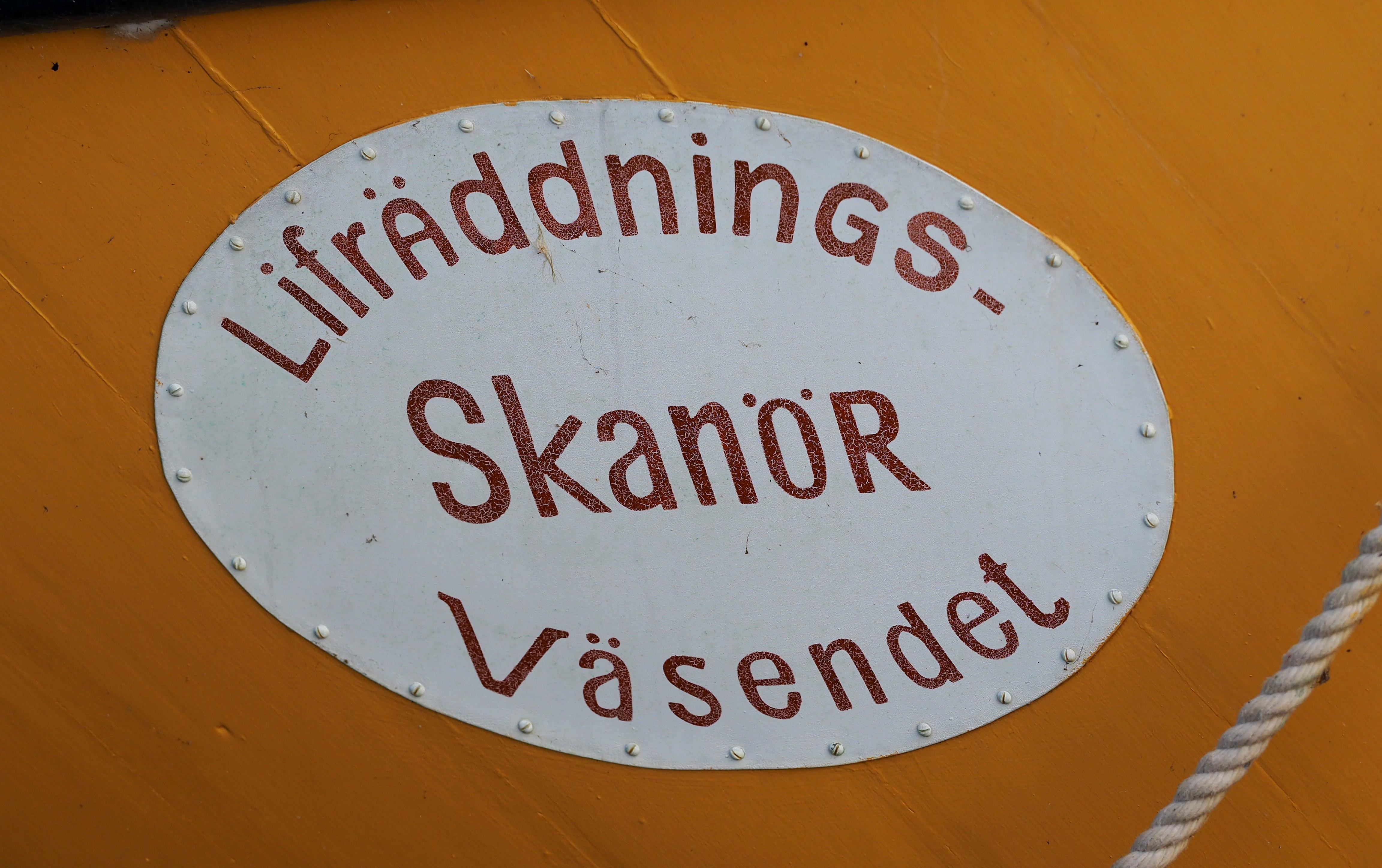
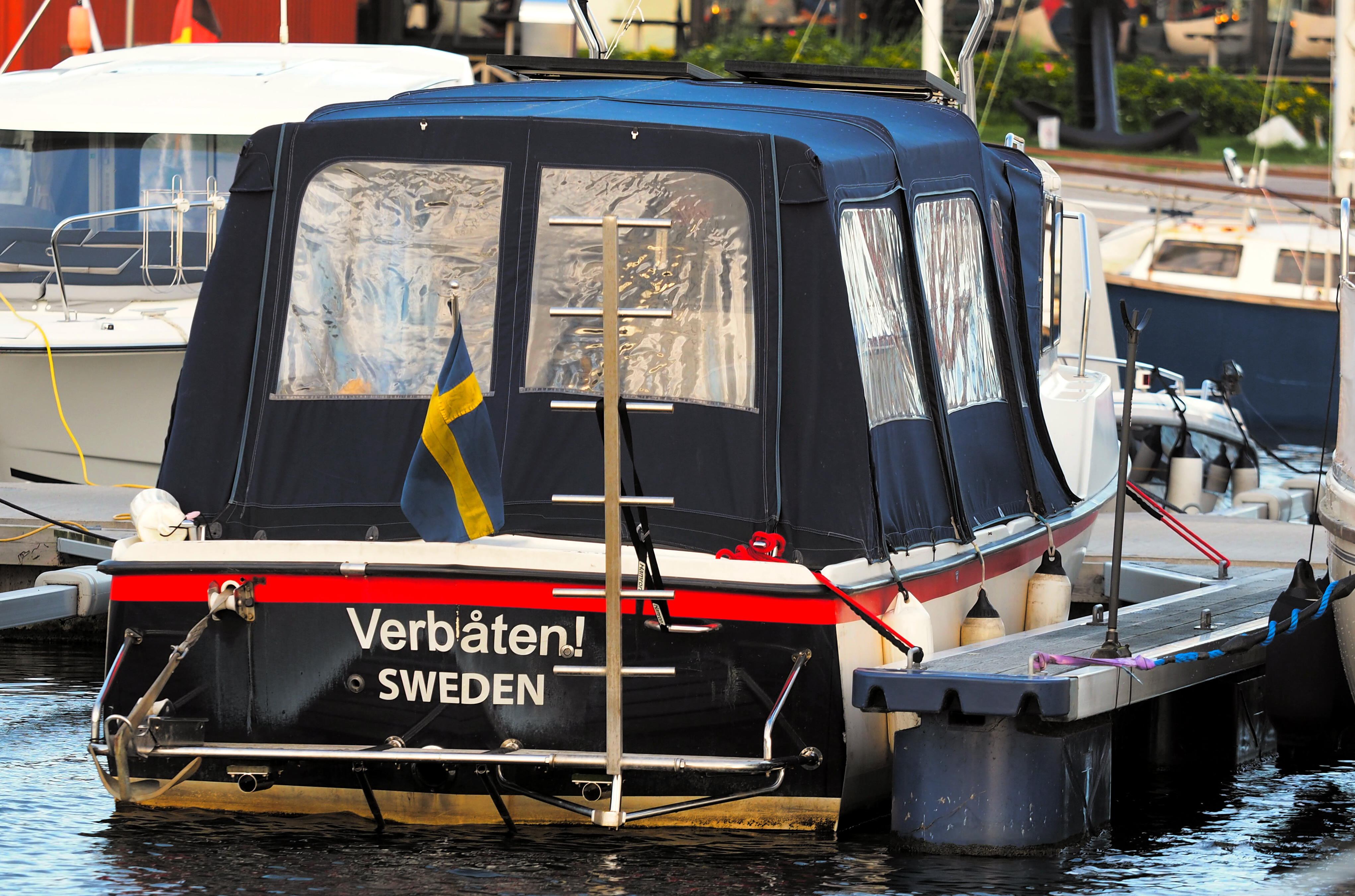
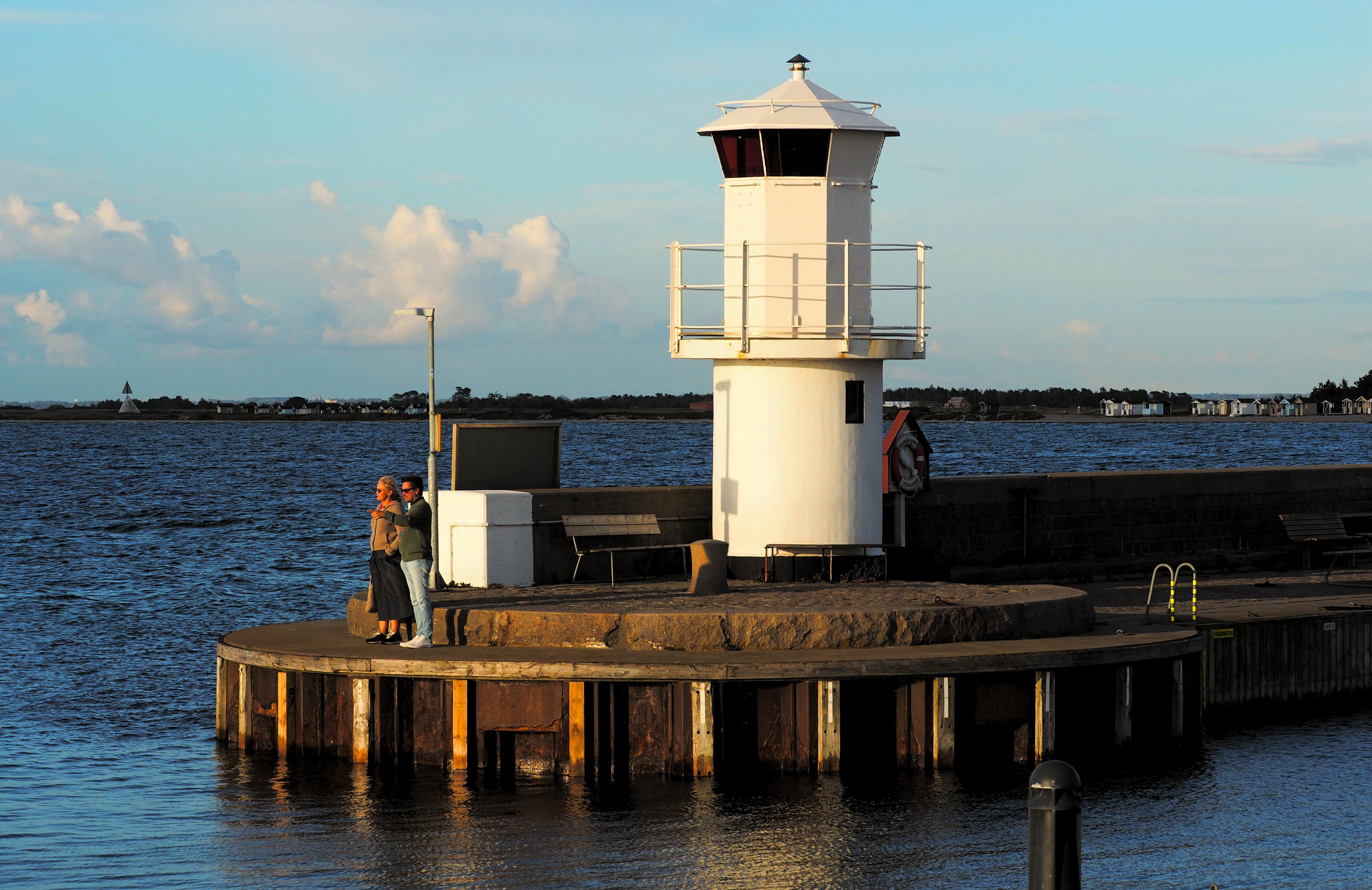
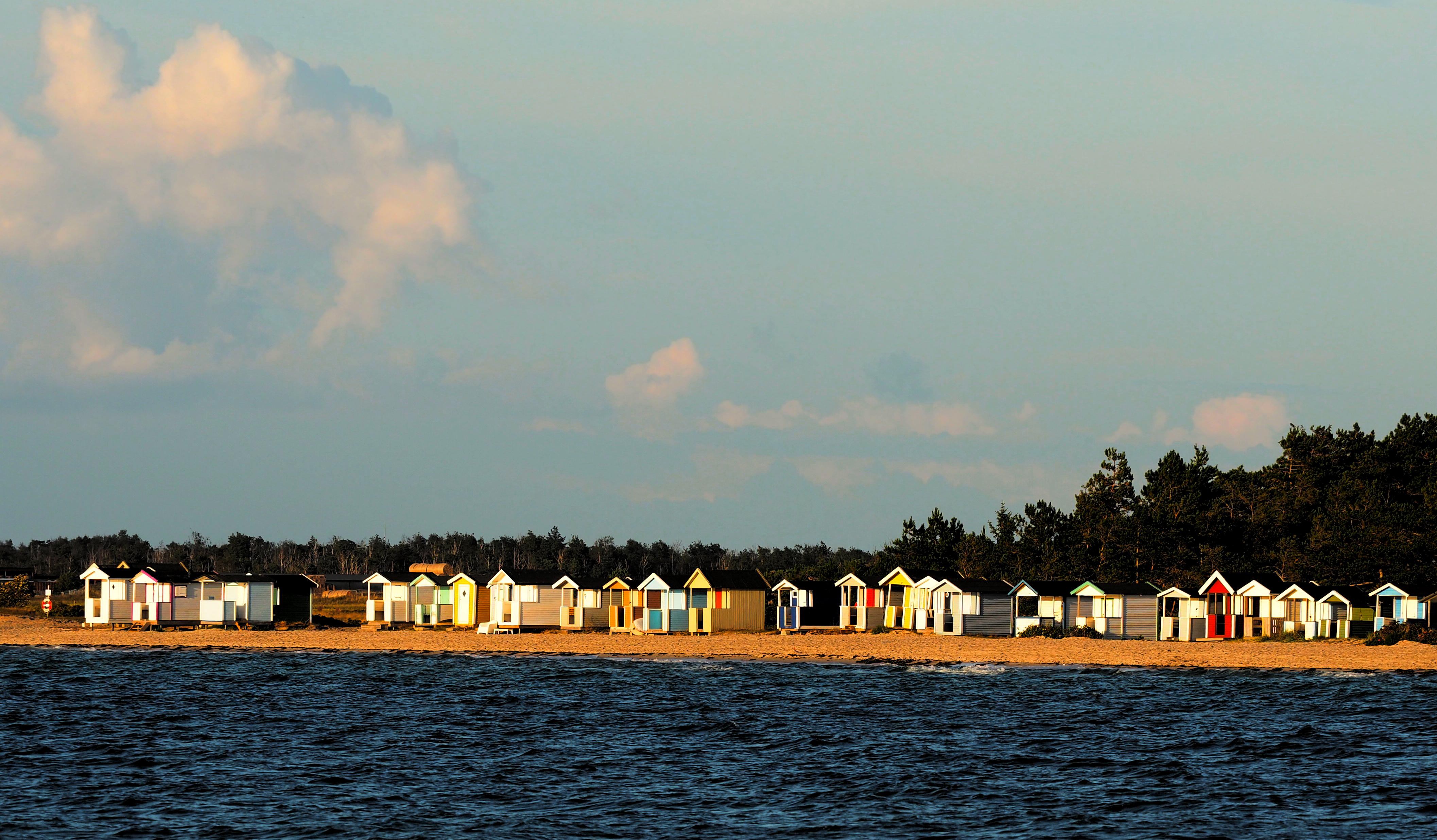
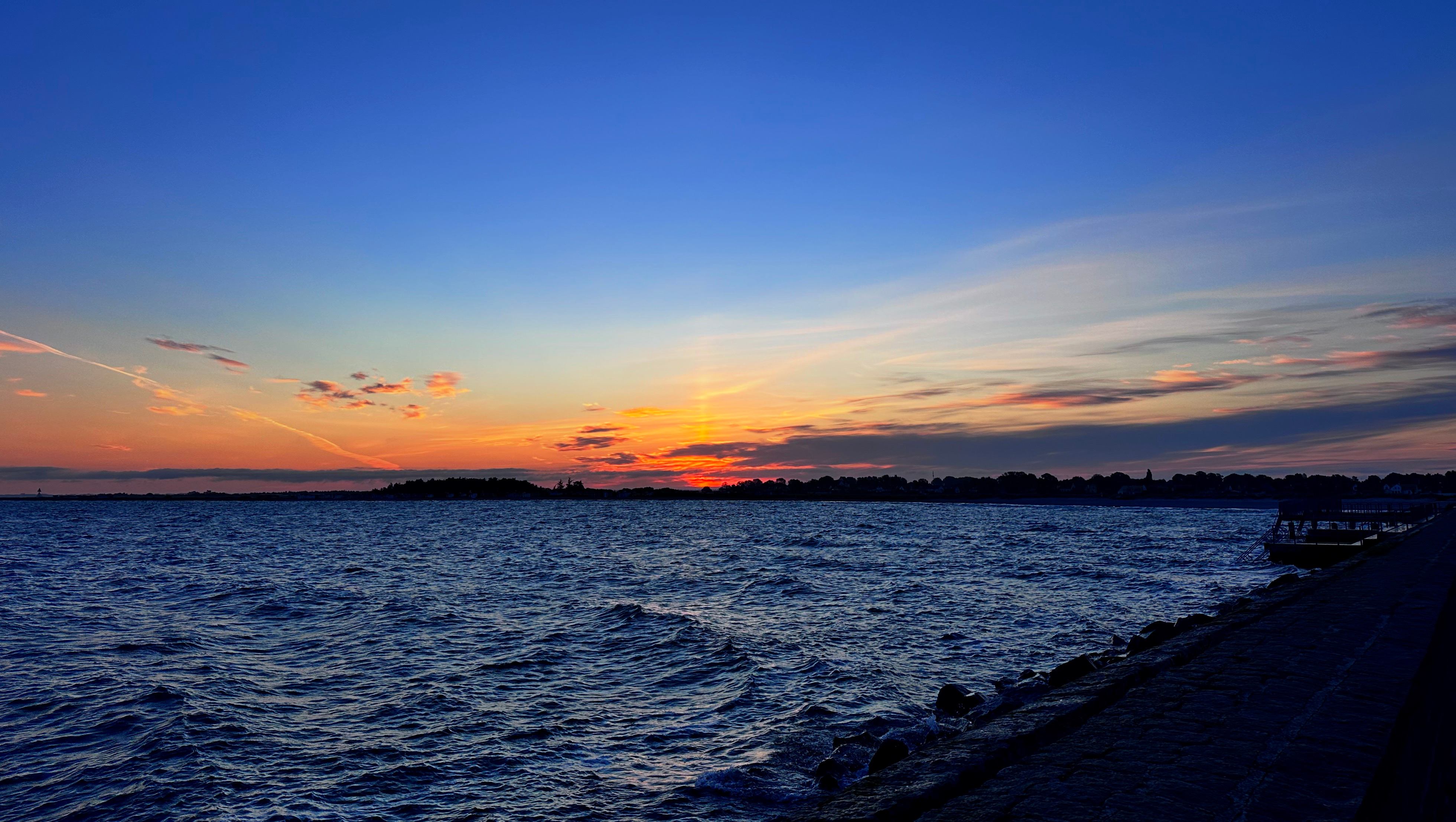
Above: Skanör. Below: The famous chalk cliffs of Møn.
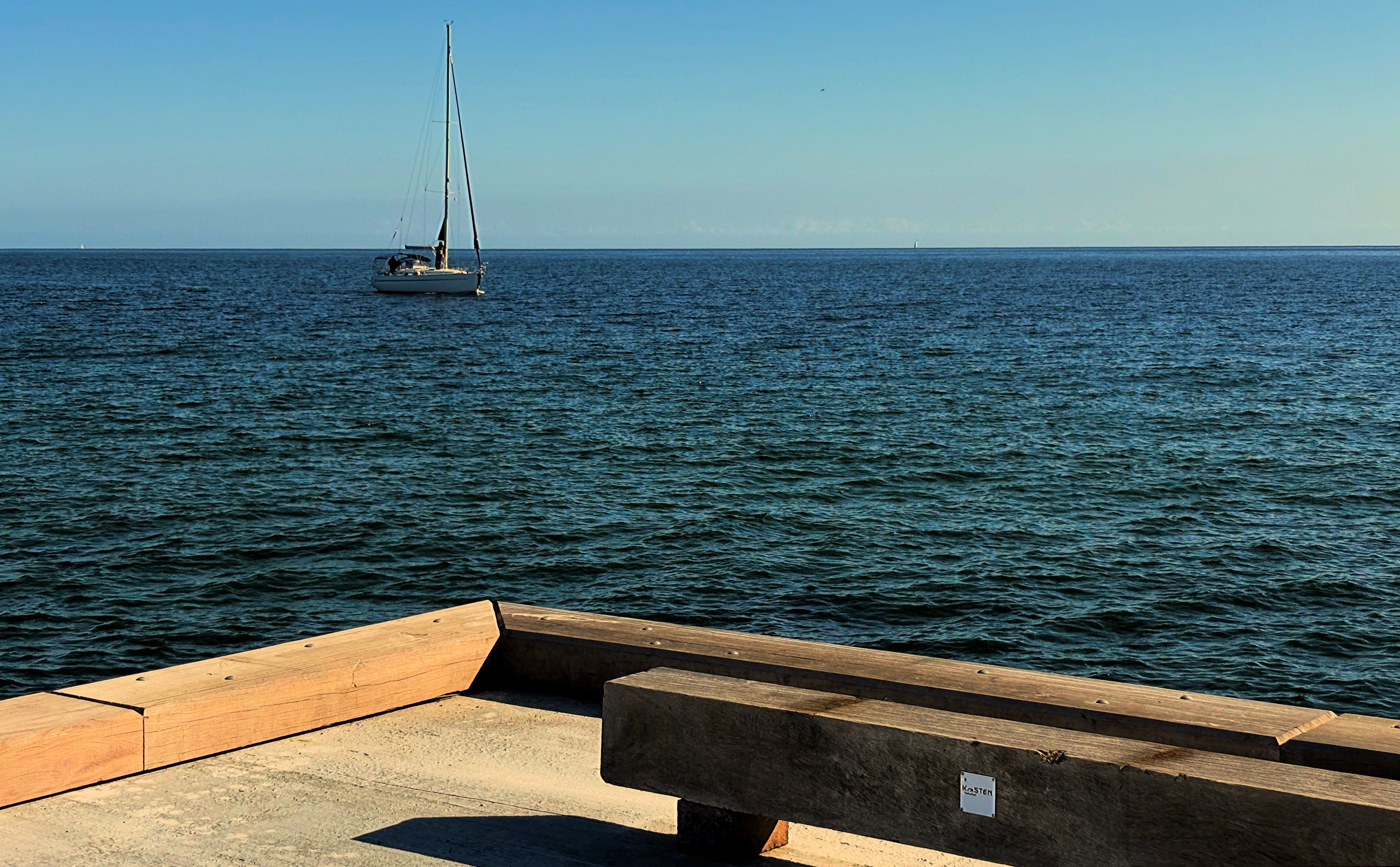
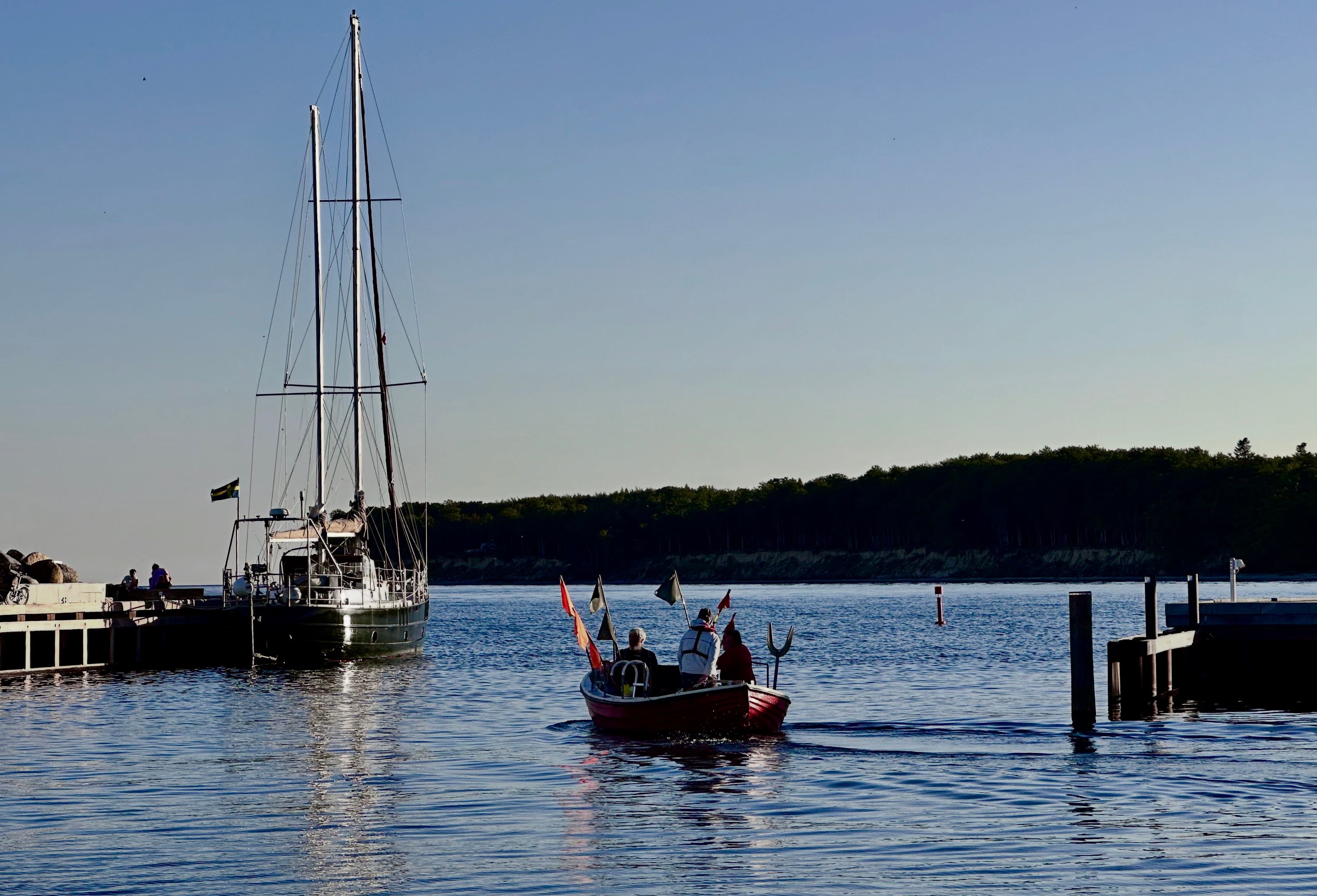
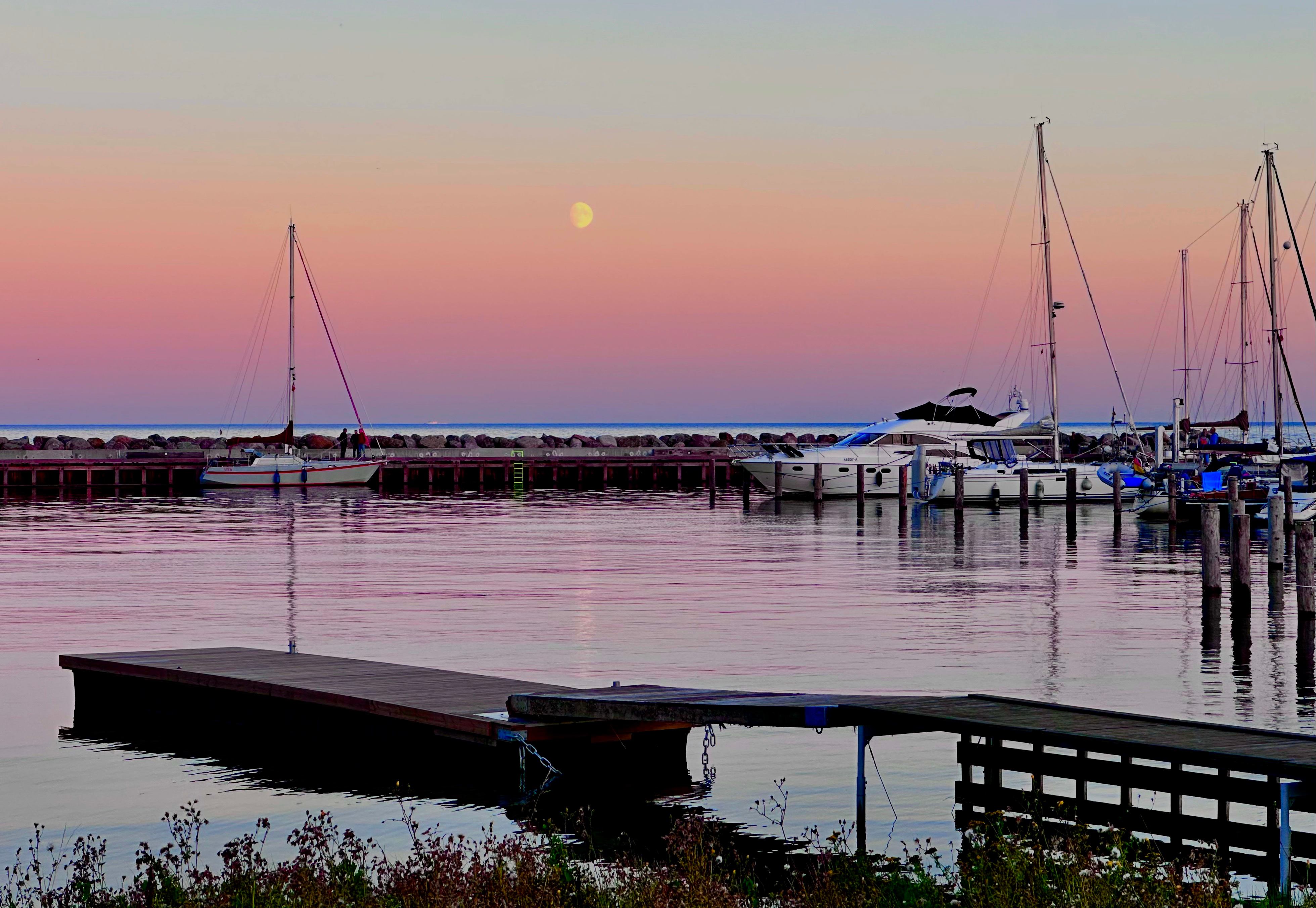
Hesnæs. A favourite harbour in our “home waters”, it was completely destroyed by the storm surge of 2023. It has since been rebuilt and reopened only in July — and everything has turned out beautifully. We are delighted to be back. Hesnæs greets us with the warmth we have missed on this year’s summer cruise: the sun is shining, the wind has dropped completely, and the beach beckons us to our first swim in the Baltic that requires no overcoming of the usual resistance to cold water whatsoever. Bliss.
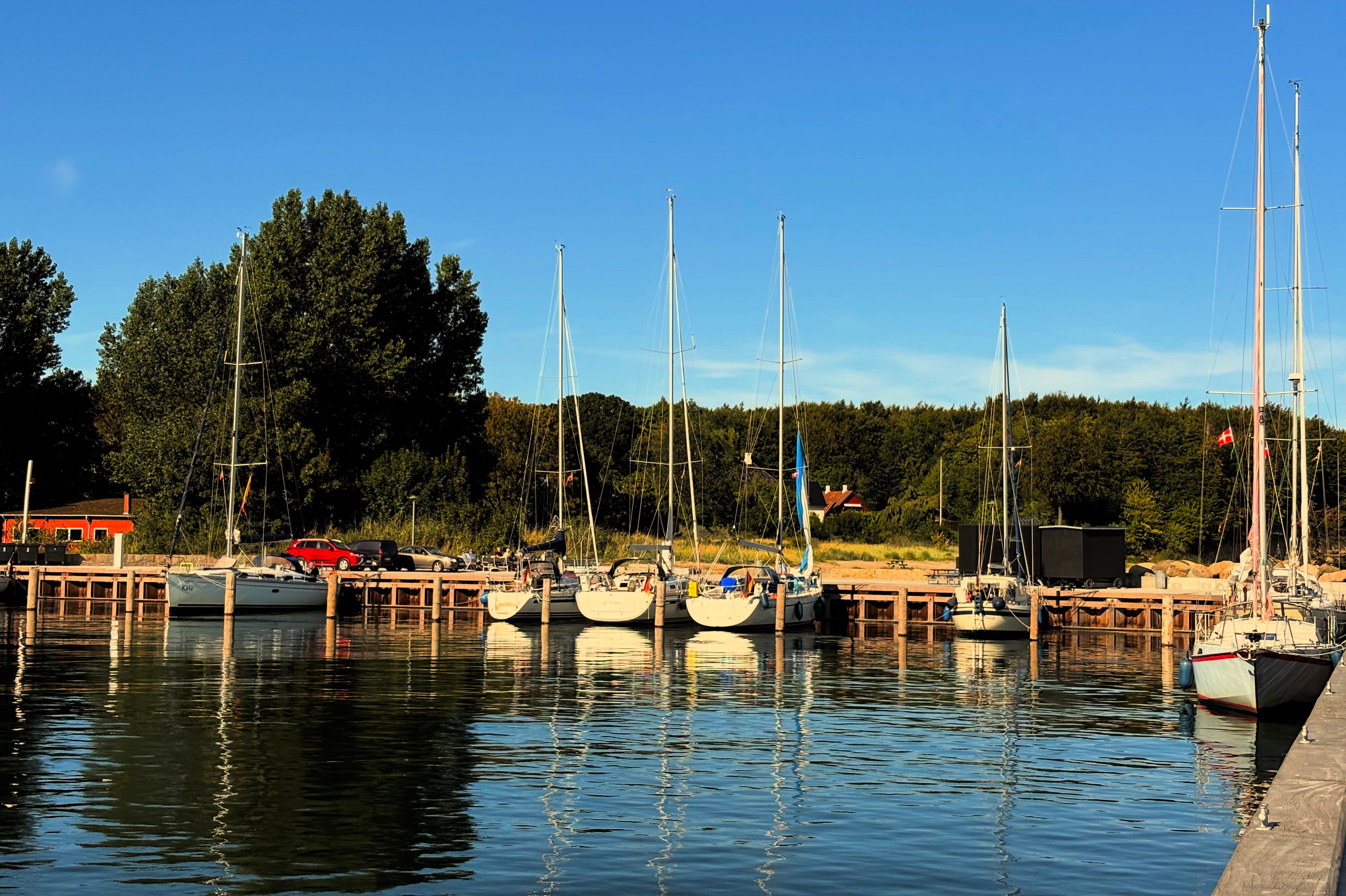
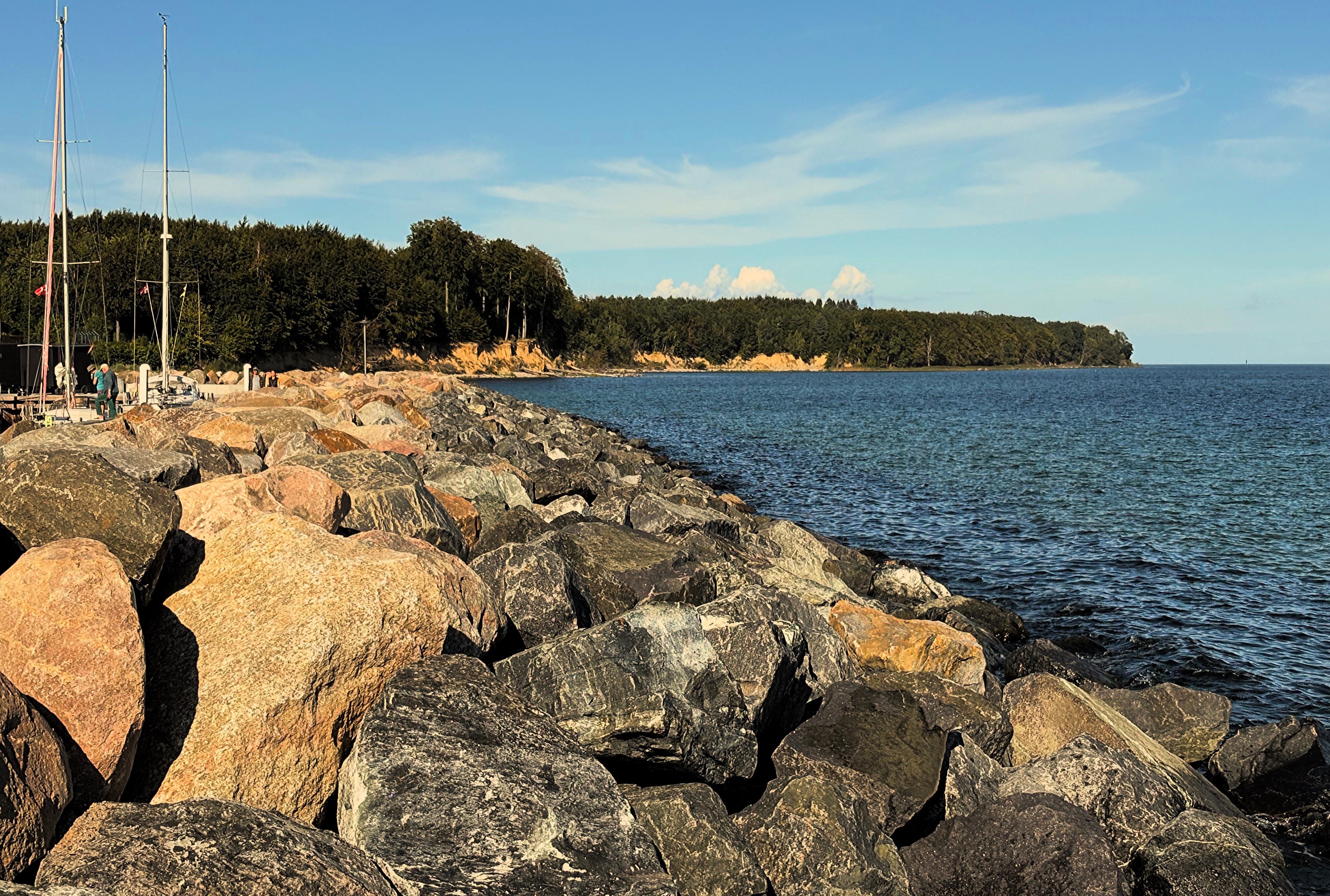
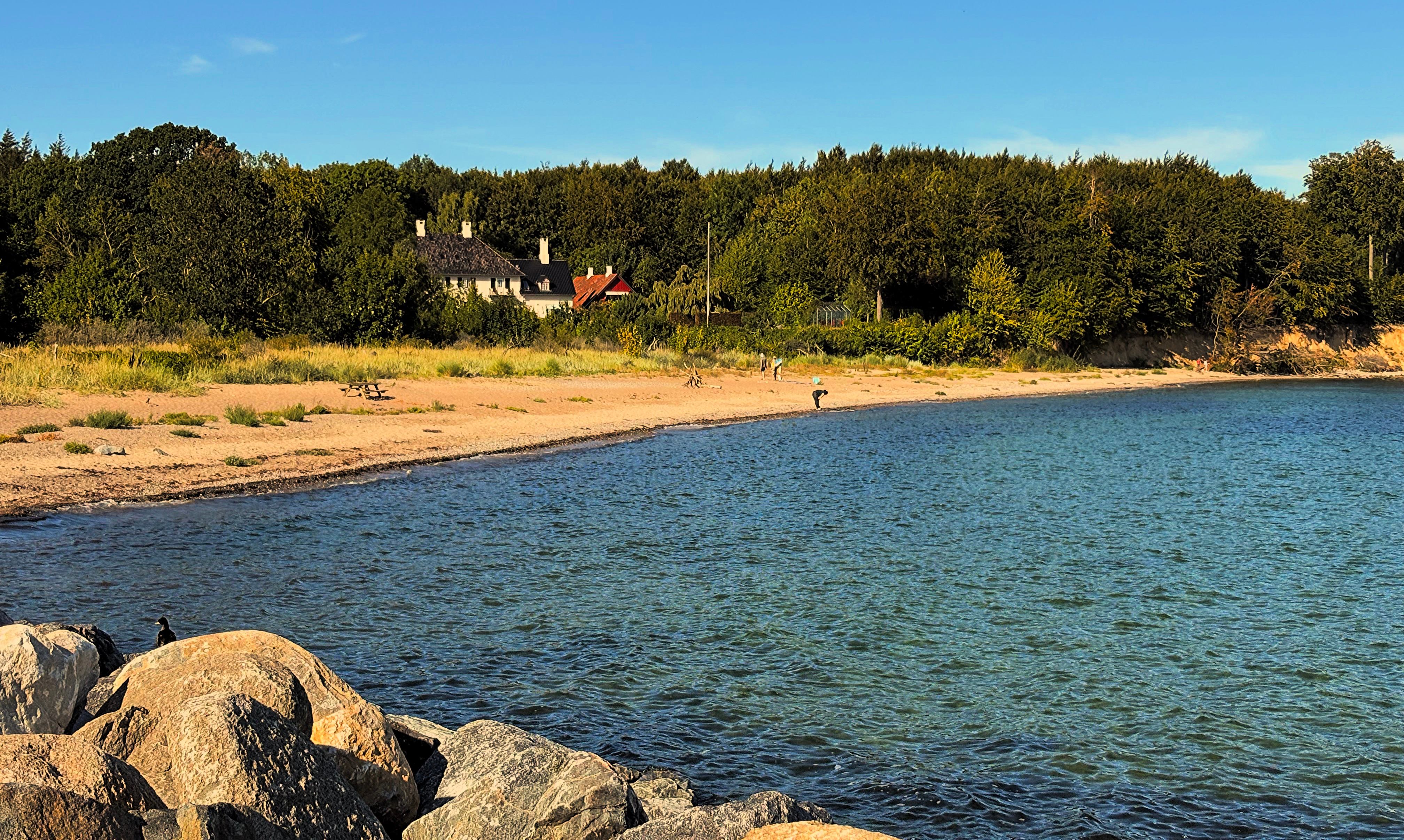
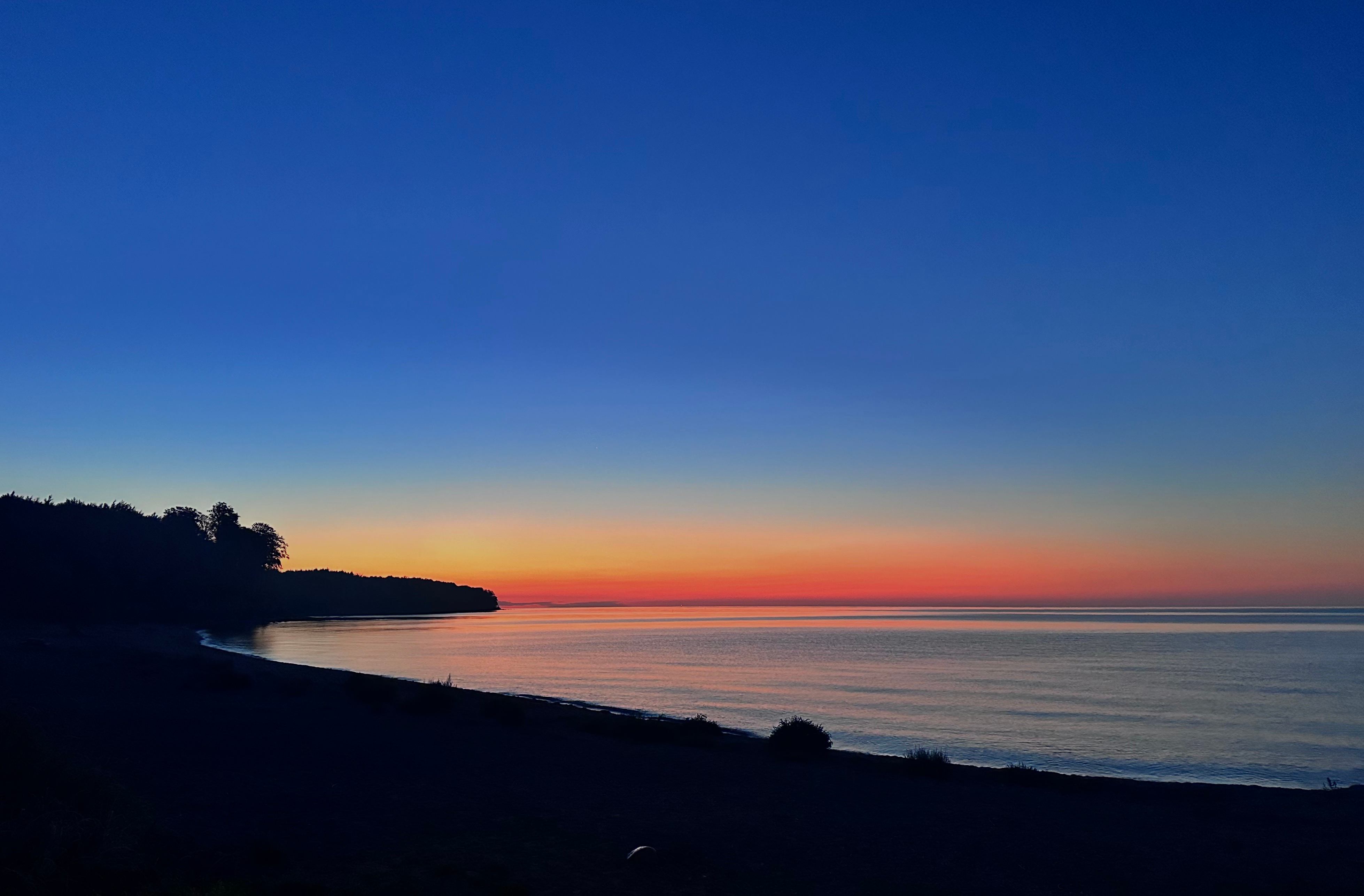
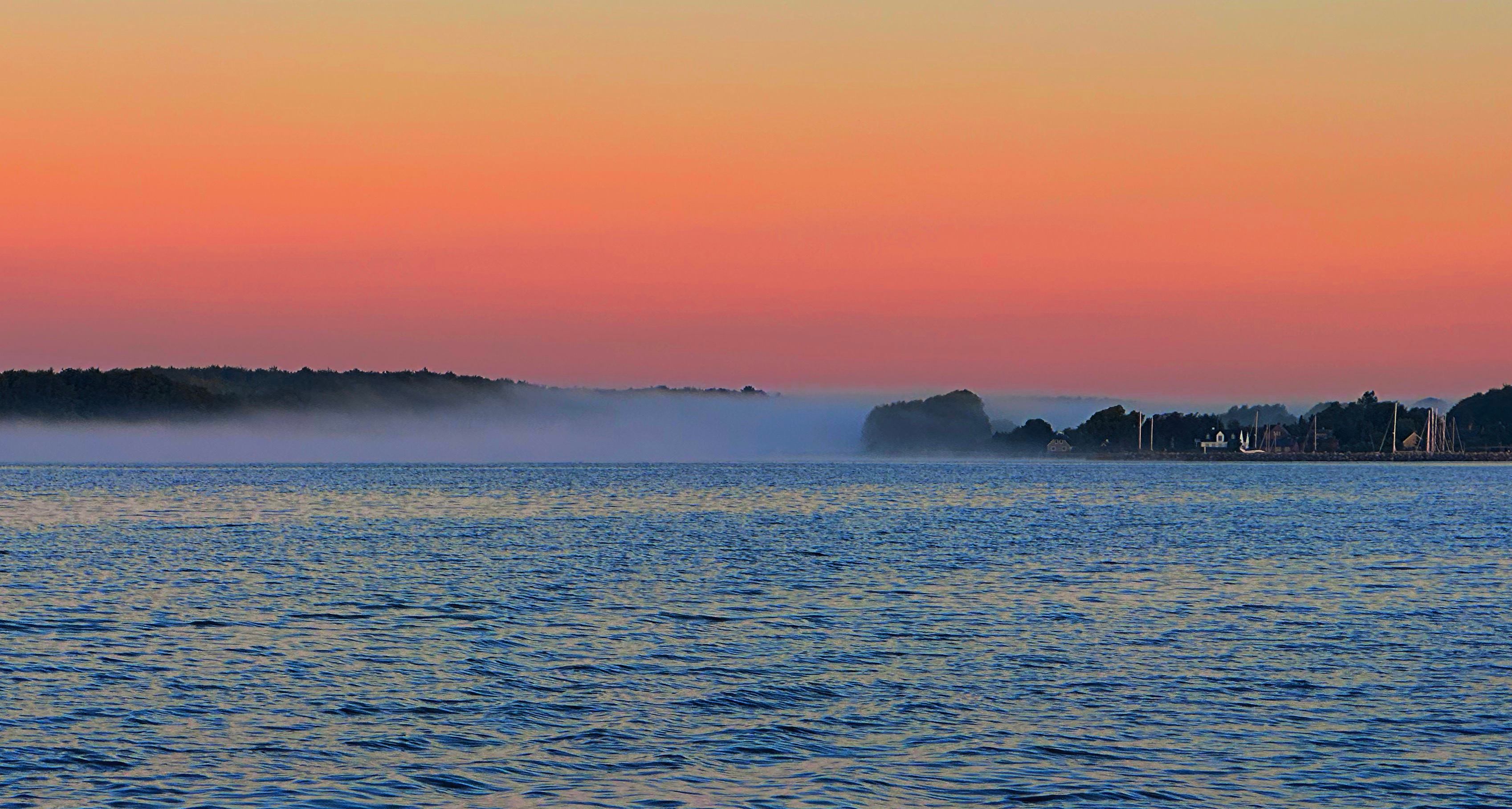
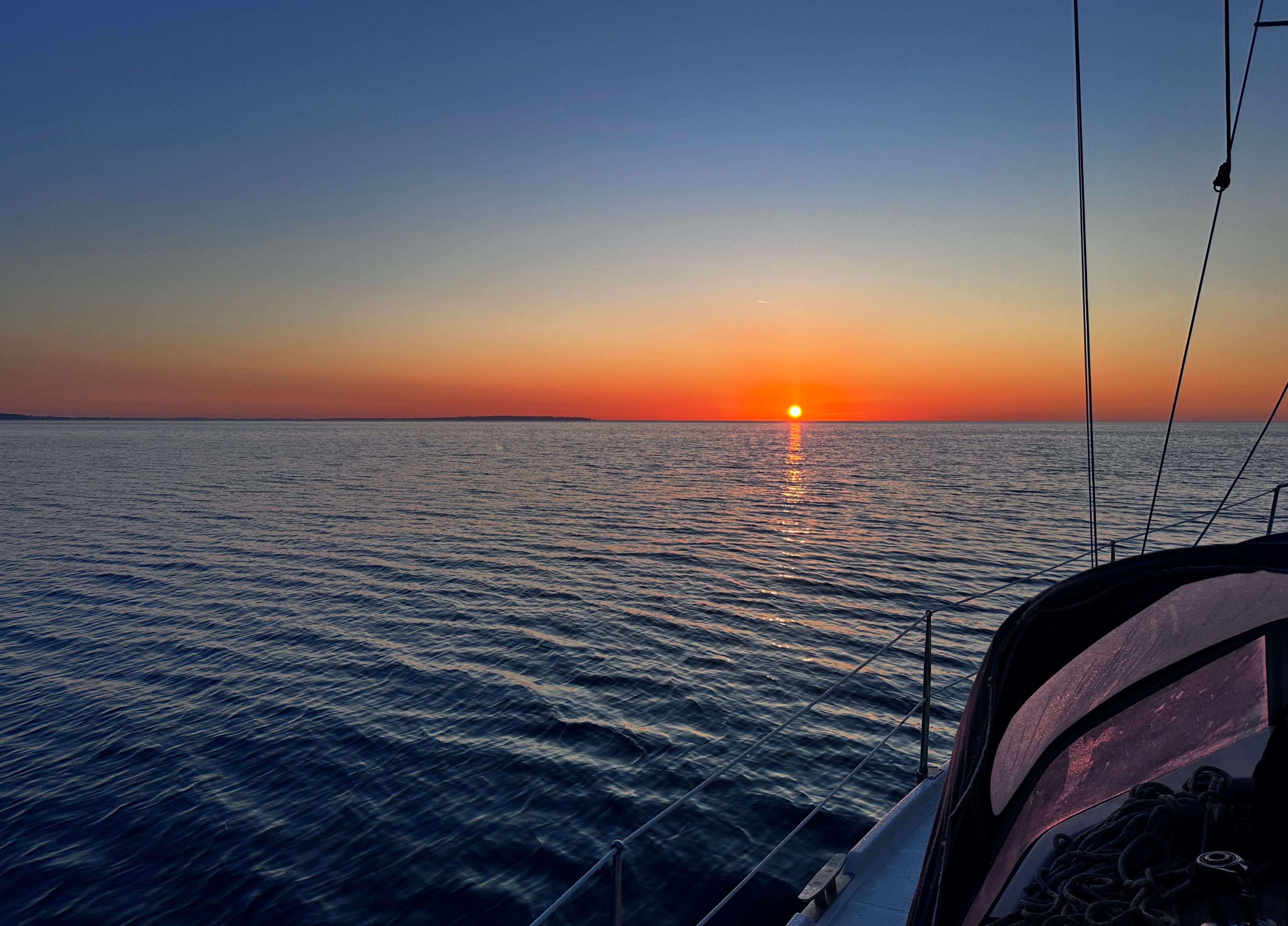
The following morning, we make an early start one more time. As expected, the strong morning sun quickly disperses the early mist (see above), allowing us to switch off our navigation lights before long.
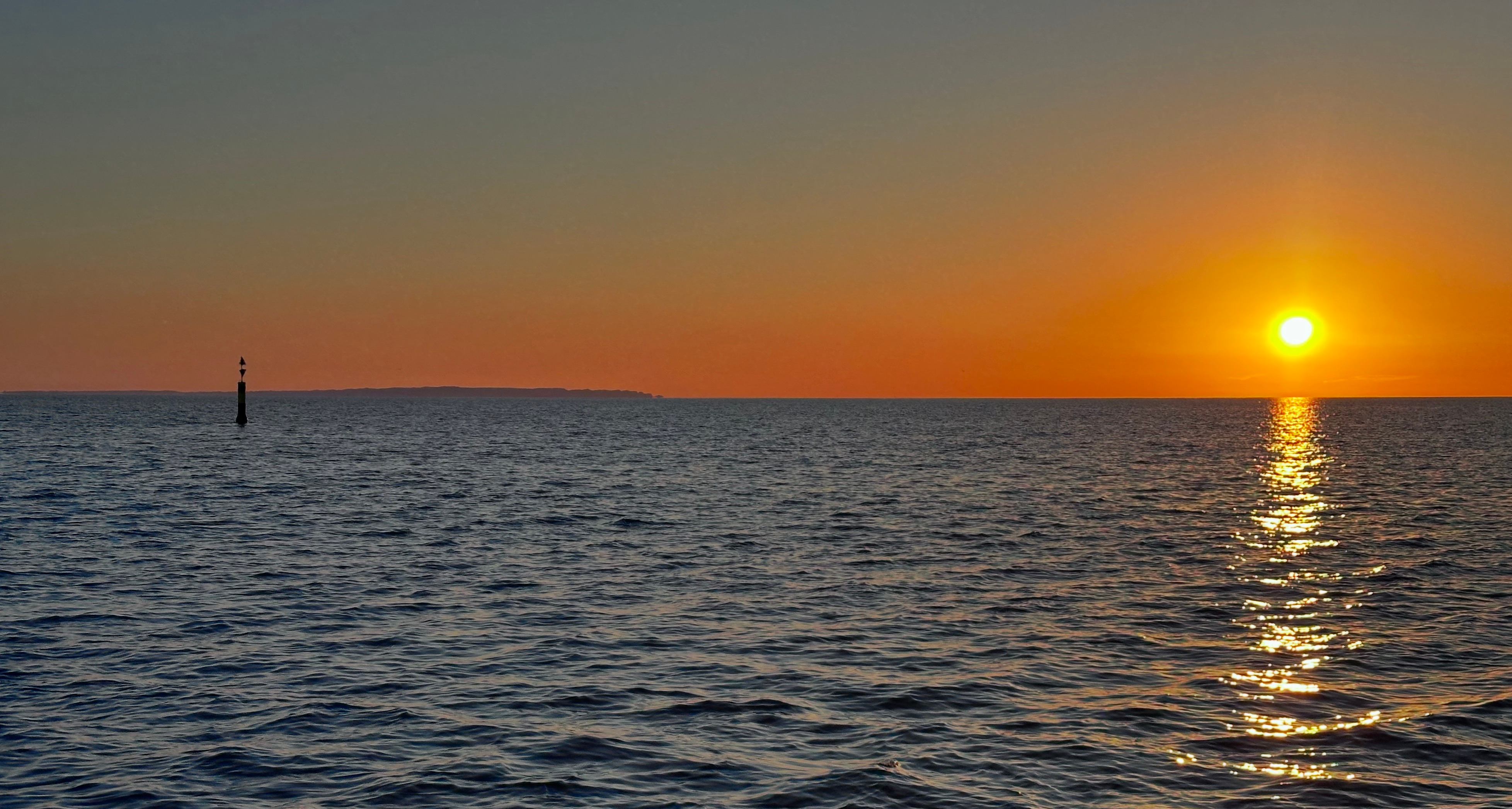
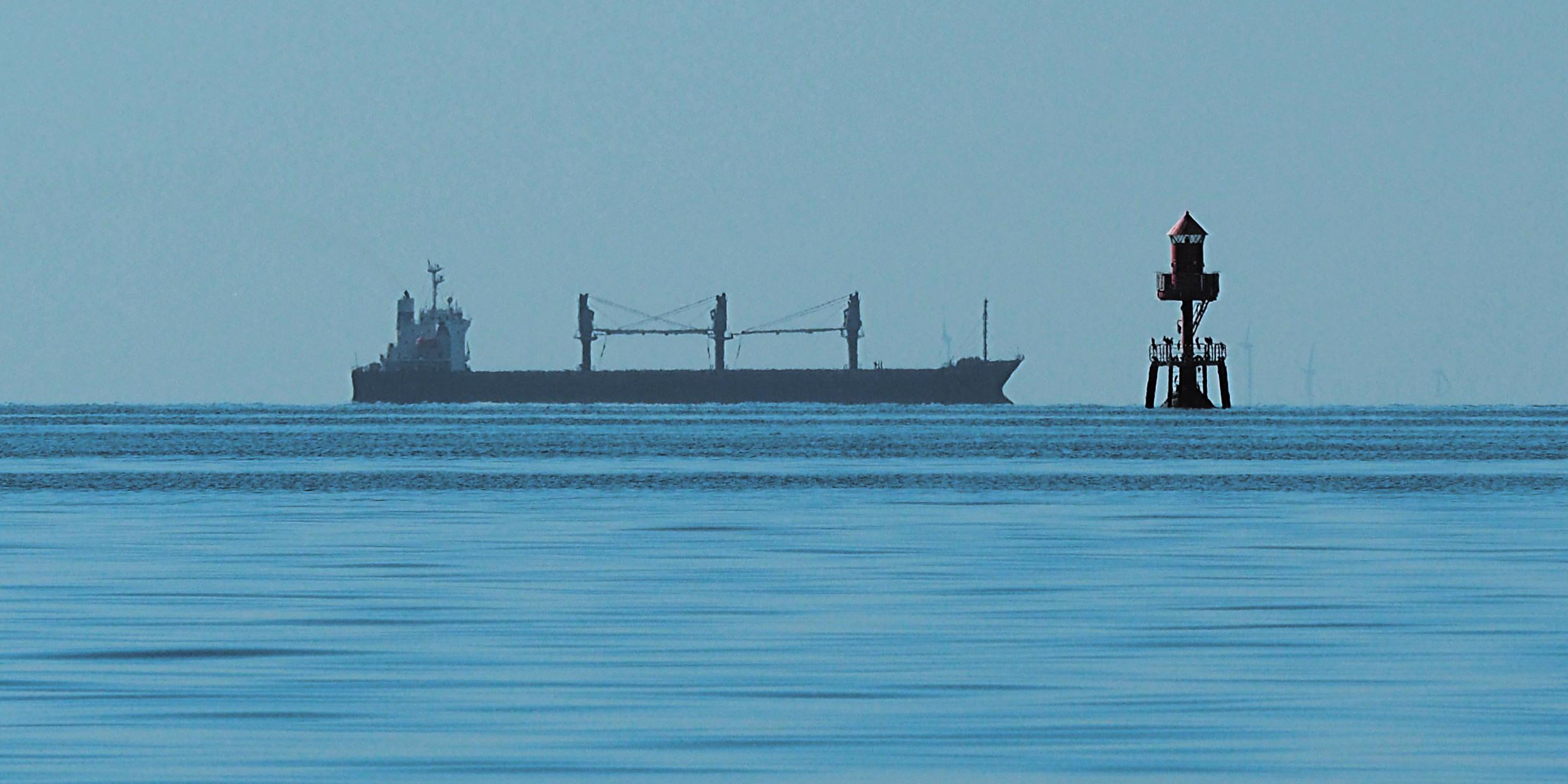
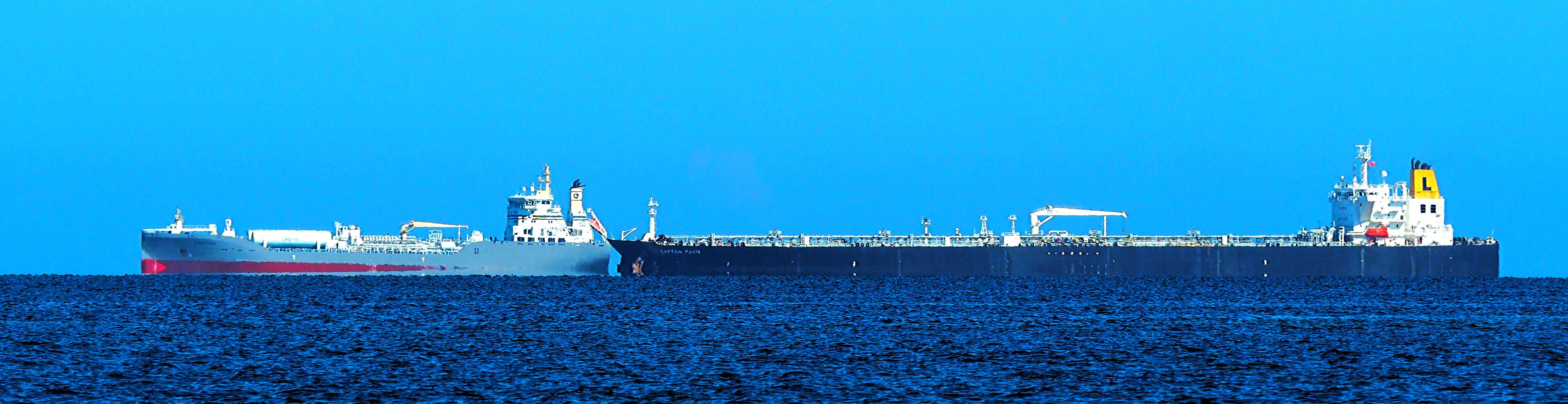
After four hours under way, we reach the Kadet Trench, with its heavy commercial traffic (above: Gedser Rev buoy; to the left, a vessel in the Kadet Trench). In accordance with the regulations, we cross the traffic separation scheme at right angles, proceeding southwards at cruising speed on a course of 180° towards Warnemünde.
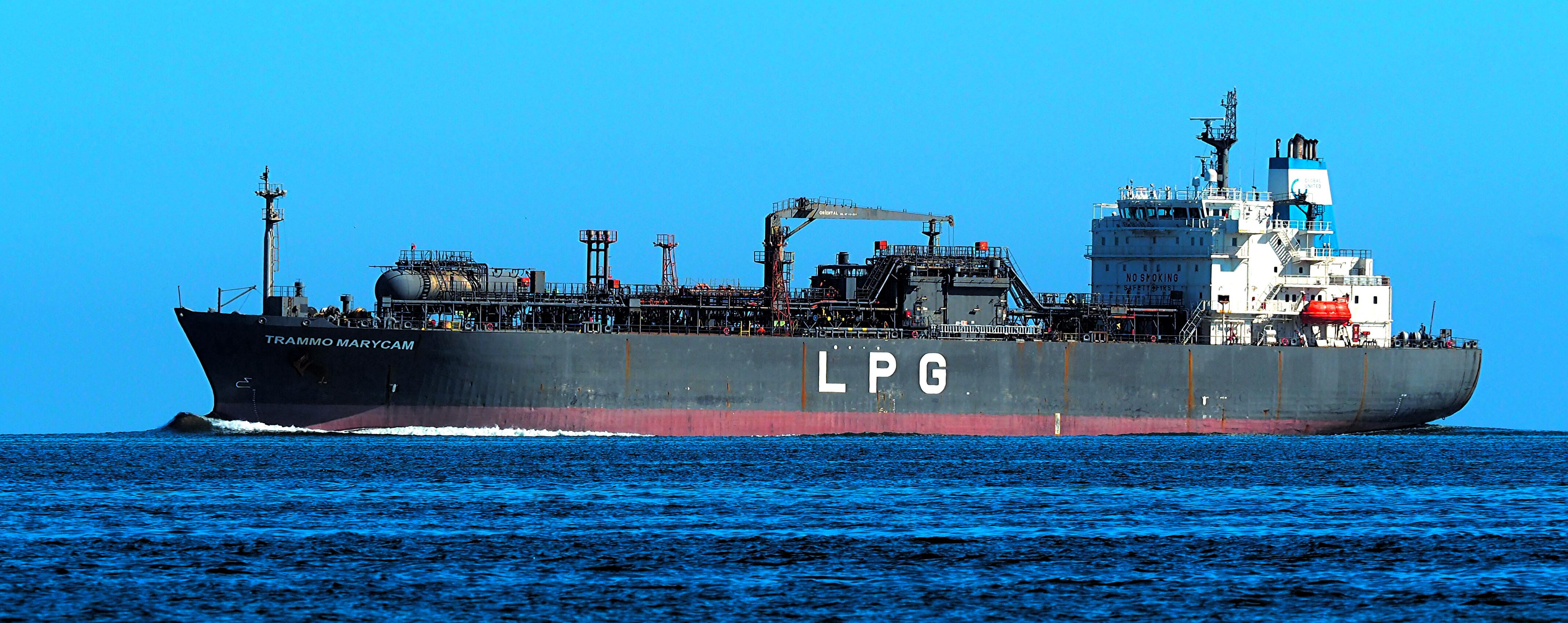
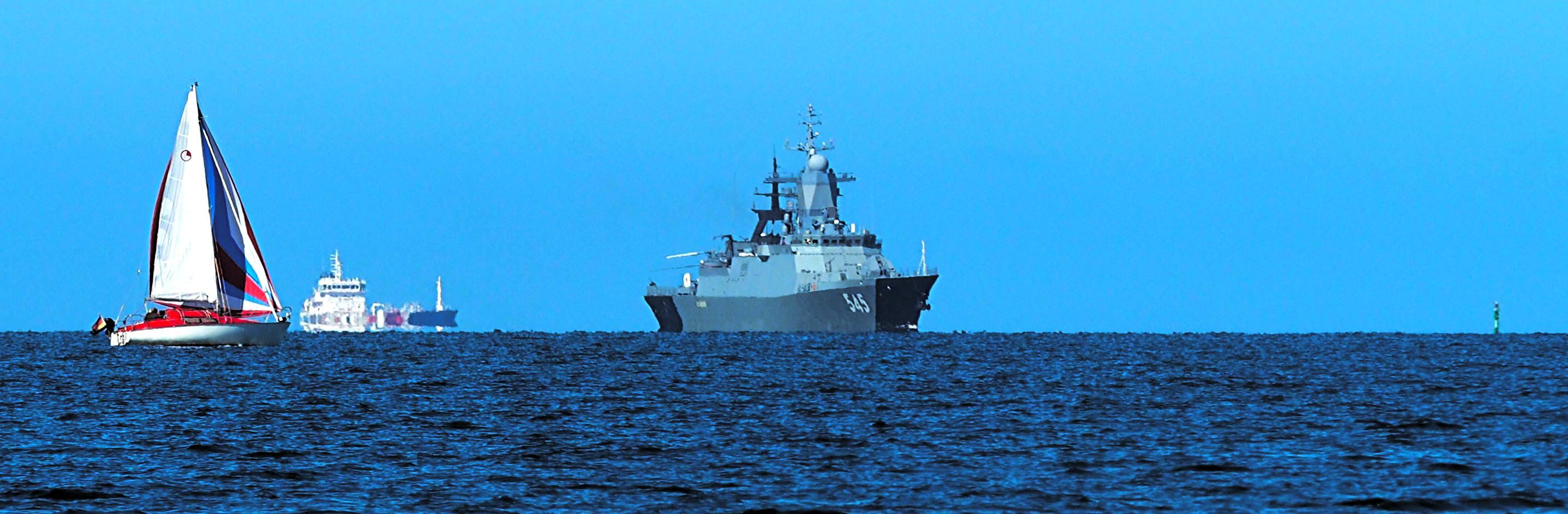
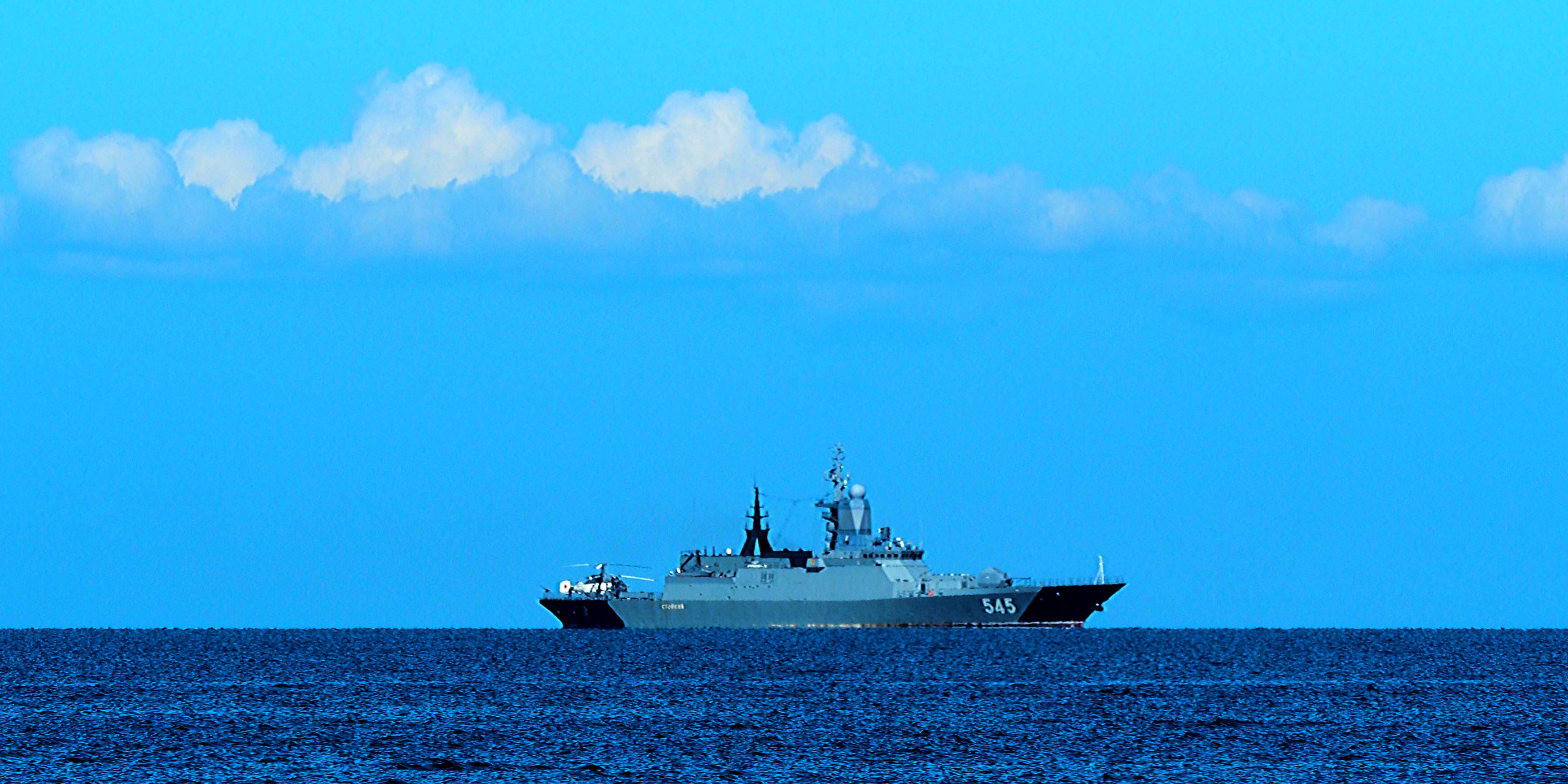
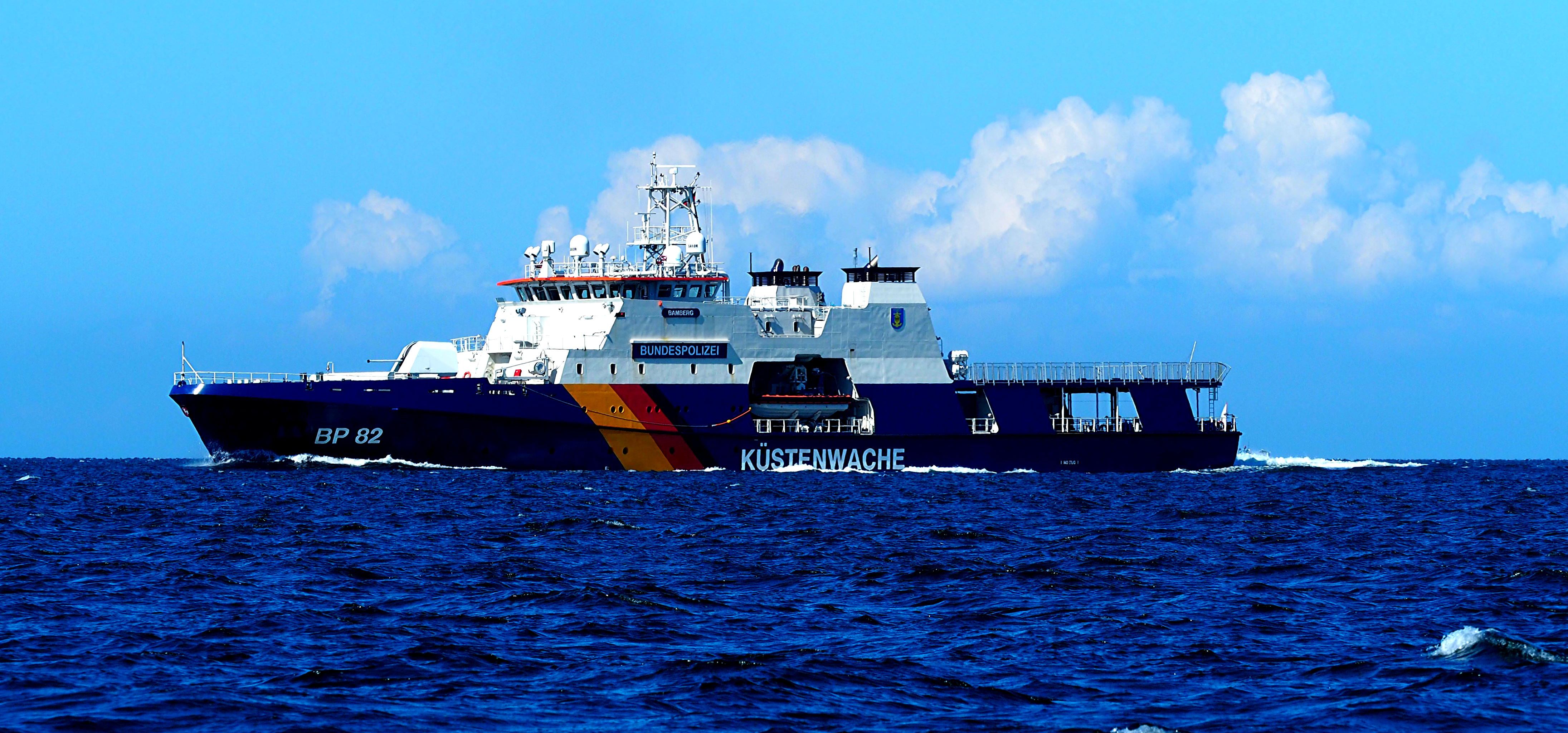
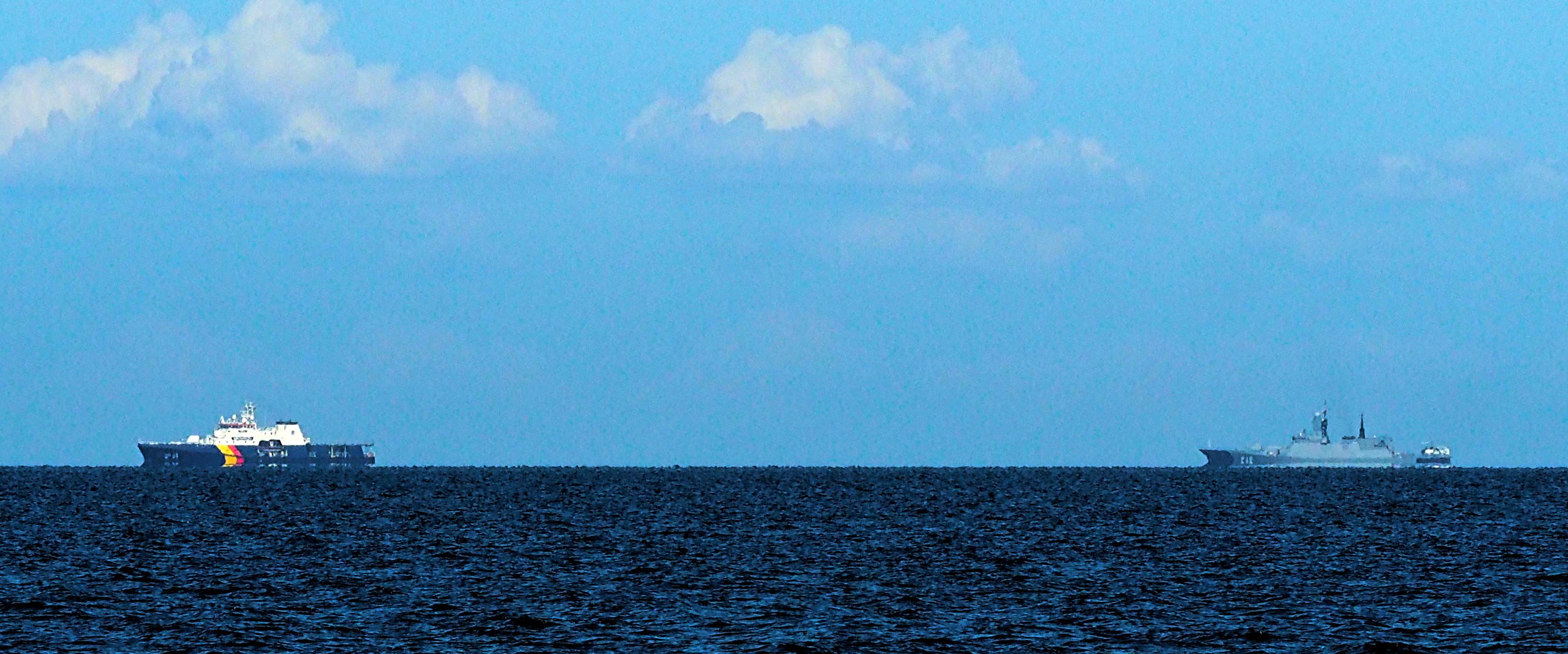
The warship Stoikiy (Стойкий, see above and below), by contrast, behaves rather less in accordance with the regulations. A Steregushchiy-class corvette of the Russian Navy, she initially proceeds slowly eastwards directly alongside the edge of the traffic separation scheme, then makes a 180-degree turn after crossing the longitude of Warnemünde and continues to loiter immediately beside the scheme. Meanwhile, a German Braunschweig-class corvette sets out from Hohe Düne; from the east comes the BP Bamberg of the German Coast Guard, while the BP Neustadt approaches from the west and eventually intercepts the Russian vessel. The Neustadt draws the Russian vessel’s attention to its apparent violation of the International ColRegs and remains within seven cables of her, keeping a close watch even after the Russian vessel alters course several more times. Europe, 2026.
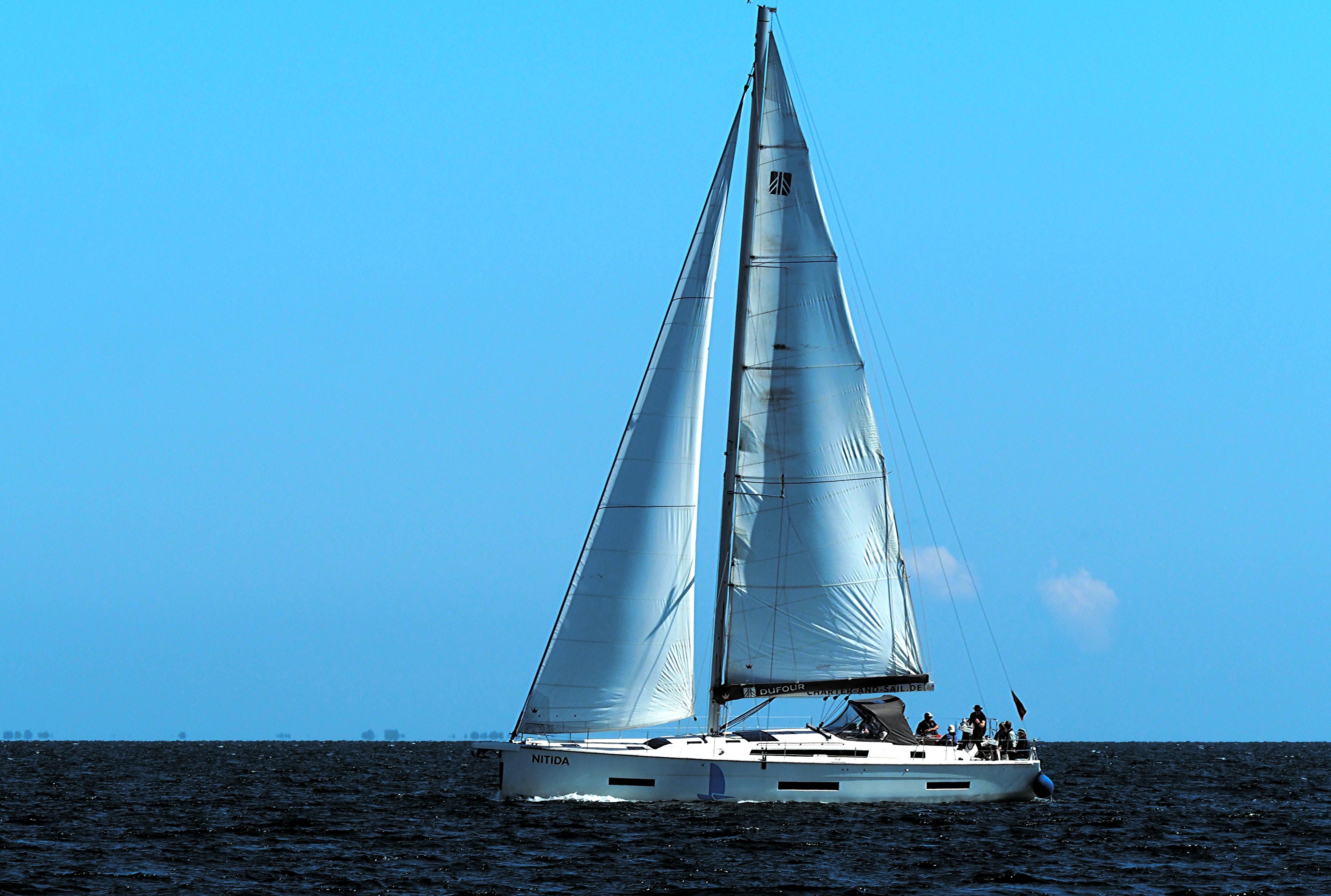
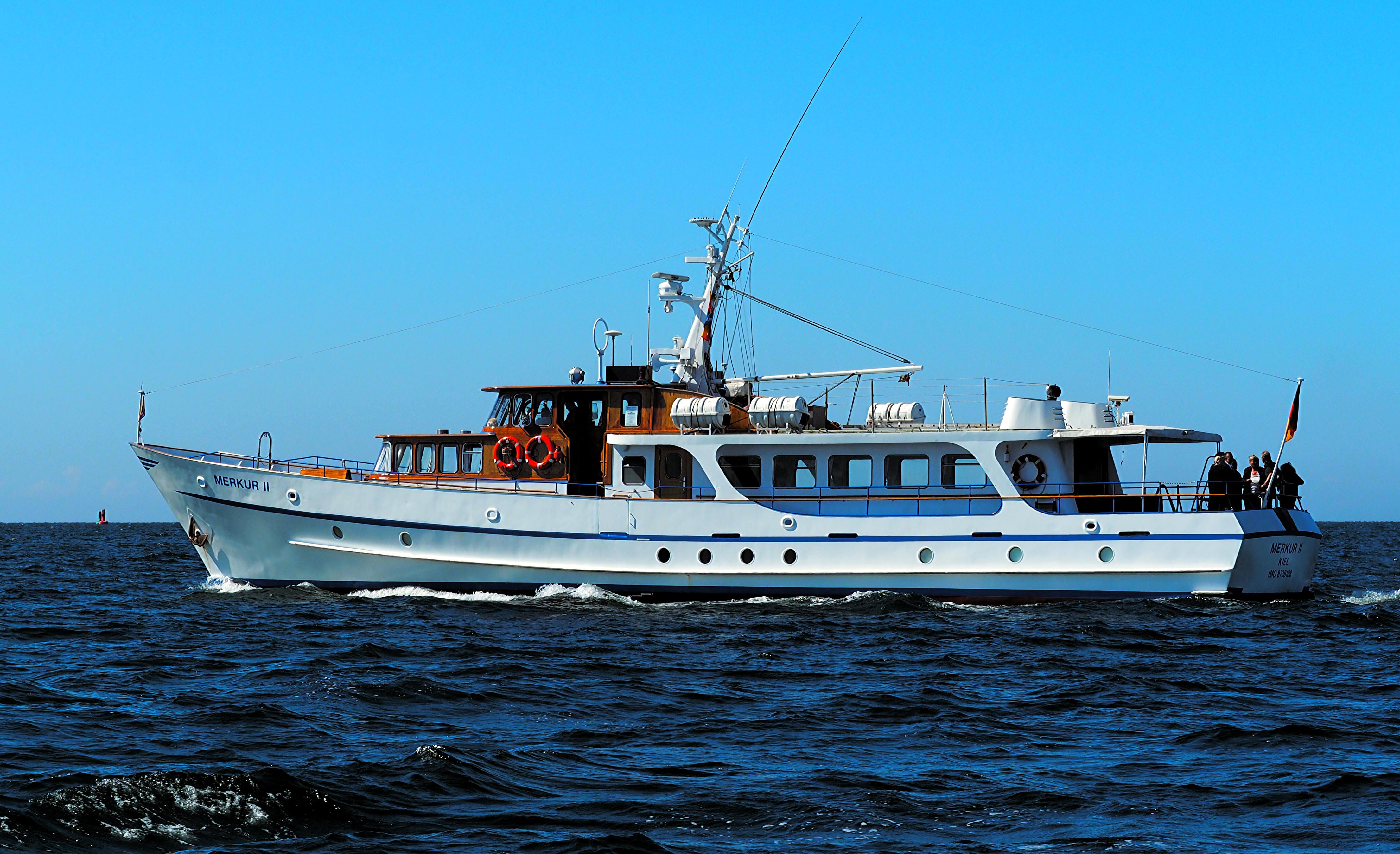
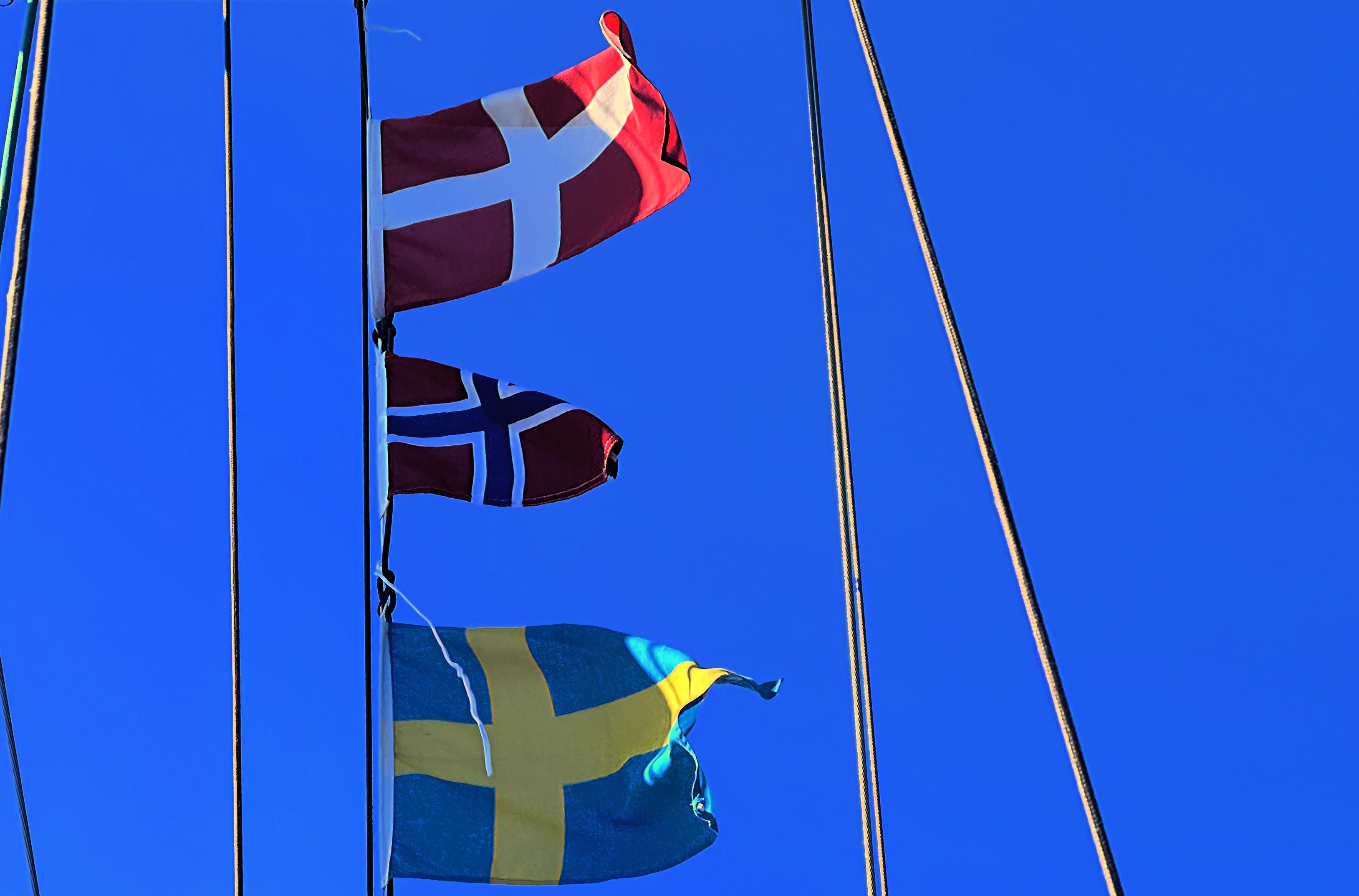
For our final stretch at sea, the good Lord grants us one last gift of glorious sailing wind. We almost find ourselves caught up in a sea burial from the MV Merkur II (see below), which is difficult to avoid given the wind angle, and eventually make a brisk arrival at Hohe Düne, which welcomes us back after 842.7 nautical miles along the Danish, Norwegian and Swedish coasts.